

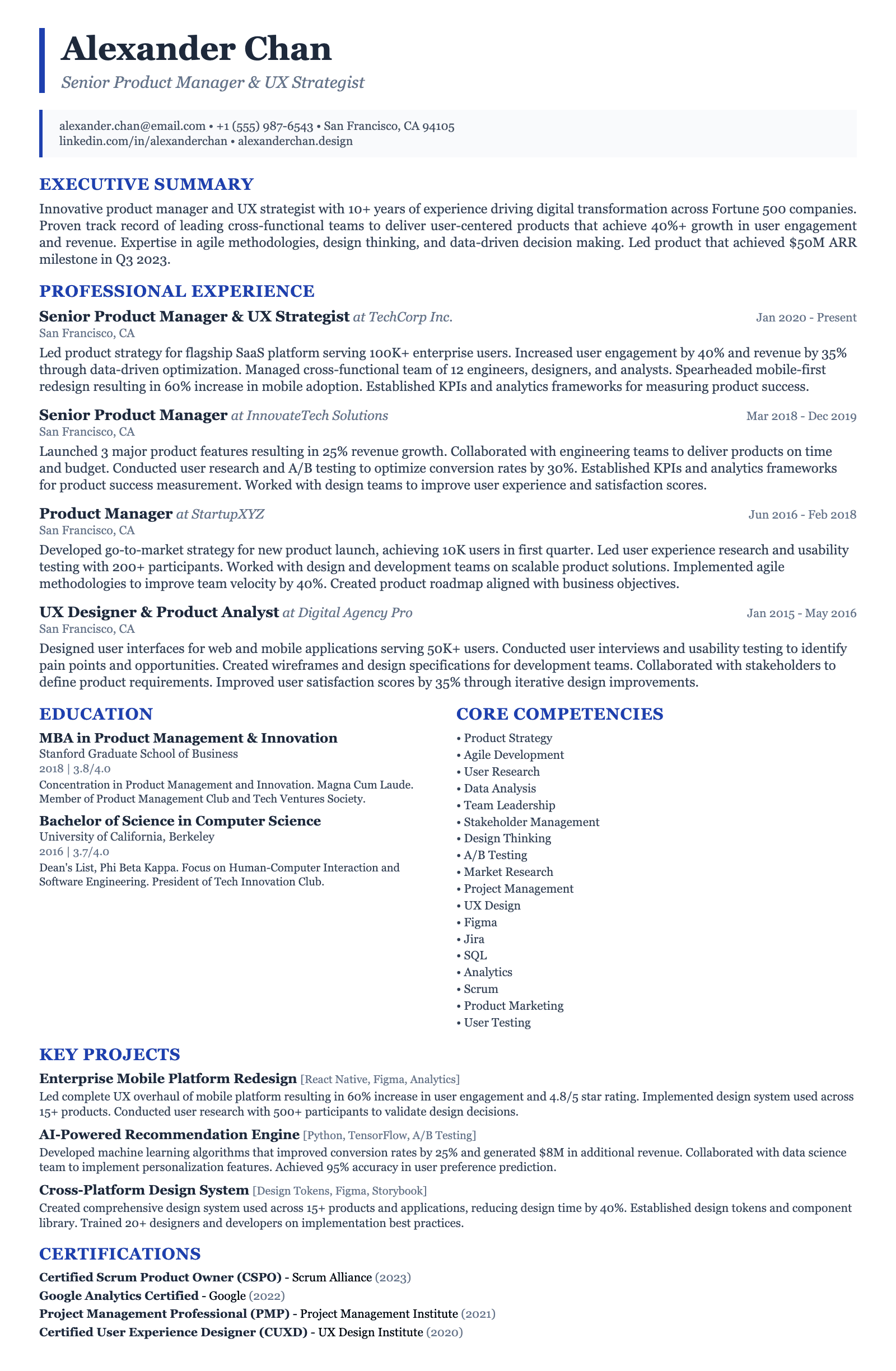
Registered Nurse Resume Format (US Edition)
The US job market for Registered Nurses is highly competitive. Recruiters look for 'Action Verbs' and quantifiable achievements. This template is designed to pass ATS filters used by top US companies.

Salary Range
$70k - $150k
Use strong action verbs and quantifiable results in every bullet. Recruiters and ATS both rank resumes higher when they see impact (e.g. “Increased conversion by 20%”) instead of duties.
A Day in the Life of a Registered Nurse
A Registered Nurse's day is a dynamic blend of patient care and administrative tasks. The day often begins with reviewing patient charts using Electronic Health Records (EHR) systems like Epic or Cerner, and collaborating with physicians and other healthcare professionals during morning rounds. Throughout the day, the nurse administers medications, monitors vital signs, performs wound care, and educates patients and their families about treatment plans. They use tools like infusion pumps, ventilators, and cardiac monitors. Documentation is crucial, with nurses meticulously recording patient progress and any interventions in the EHR. The day may involve responding to emergencies, assisting with procedures, and participating in interdisciplinary team meetings to discuss patient care strategies. Accurate handoffs and clear communication with the oncoming shift are essential before the end of the day, ensuring seamless patient care.
Skills Matrix
Must Haves
Technical
Resume Killers (Avoid!)
Listing only job duties without quantifiable achievements or impact.
Using a generic resume for every Registered Nurse application instead of tailoring to the job.
Including irrelevant or outdated experience that dilutes your message.
Using complex layouts, graphics, or columns that break ATS parsing.
Leaving gaps unexplained or using vague dates.
Writing a long summary or objective instead of a concise, achievement-focused one.
Typical Career Roadmap (US Market)
Top Interview Questions
Be prepared for these common questions in US tech interviews.
Q: Describe a time you had to advocate for a patient's needs when they couldn't do so themselves.
MediumExpert Answer:
In my previous role, a patient with limited English proficiency was prescribed a medication they were allergic to, according to their chart. I immediately alerted the physician and pharmacist, advocating for the patient's safety. I then collaborated with a translator to educate the patient about their medications and potential allergies. This situation highlights my commitment to patient advocacy and safety.
Q: How do you stay current with the latest advancements in nursing practice and technology?
MediumExpert Answer:
I actively participate in continuing education courses, attend professional conferences, and subscribe to reputable nursing journals such as the American Journal of Nursing. I also engage in hospital-sponsored training programs on new medical equipment and procedures. Recently, I completed a course on the latest advancements in wound care management to enhance my skills in that area.
Q: Tell me about a time you made a mistake at work. What did you do to rectify it?
MediumExpert Answer:
Early in my career, I miscalculated a medication dosage for a pediatric patient. I immediately recognized the error, notified the supervising physician, and closely monitored the patient for any adverse effects. Thankfully, no harm came to the patient. I then implemented a double-check system with my colleagues to prevent similar errors in the future. This experience reinforced the importance of vigilance and teamwork.
Q: Describe a situation where you had to handle a conflict with a colleague or another healthcare professional.
MediumExpert Answer:
I once disagreed with a physician's treatment plan for a patient with a complex medical history. I respectfully voiced my concerns, citing evidence-based practice guidelines. We engaged in a constructive discussion, reviewed the patient's chart together, and ultimately reached a mutually agreeable solution that prioritized the patient's best interests. This experience taught me the importance of open communication and collaboration in resolving conflicts.
Q: Walk me through your experience with Electronic Health Records (EHR) systems like Epic or Cerner.
EasyExpert Answer:
I have extensive experience using EHR systems, particularly Epic and Cerner, in my previous roles. I am proficient in documenting patient assessments, medication administration, and care plans within these systems. I can also use EHRs to track patient outcomes, generate reports, and communicate with other healthcare providers. I am comfortable navigating these systems efficiently and accurately to ensure seamless patient care.
Q: Imagine you have a patient who is anxious about an upcoming procedure. How would you approach the situation?
EasyExpert Answer:
I would start by actively listening to the patient's concerns and validating their feelings. I would provide clear and concise information about the procedure, explaining what to expect and addressing any misconceptions. I would also offer reassurance and emotional support, using techniques such as deep breathing exercises or distraction methods to help them manage their anxiety. My goal is to empower the patient to feel more in control and reduce their stress levels.
ATS Optimization Tips for Registered Nurse
Use exact keywords from the job posting, especially in the skills and experience sections. ATS systems scan for specific terms related to nursing skills, certifications, and medical equipment.
Format your resume with clear headings like 'Summary,' 'Experience,' 'Skills,' and 'Education.' ATS systems recognize these standard sections and parse information accordingly.
Quantify your accomplishments whenever possible using numbers and metrics. For instance, 'Reduced patient falls by 15% through implementation of a new safety protocol.'
Include both hard skills (e.g., IV insertion, wound care) and soft skills (e.g., communication, teamwork) in your skills section, as ATS systems often search for both types of competencies.
List certifications like BLS, ACLS, and specialty certifications (CCRN, CEN) prominently, as these are critical for many Registered Nurse positions. Spell out the full name of the certification in addition to the acronym.
Use a chronological resume format to showcase your career progression and experience. ATS systems generally prefer this format for its clarity and ease of parsing.
Save your resume as a PDF to preserve formatting and ensure that the ATS can accurately read your document. Avoid using tables, graphics, or unusual fonts that may confuse the system.
Tailor your resume to each job application by prioritizing the skills and experiences that are most relevant to the specific position. This demonstrates to the ATS that you are a strong match for the role.
Approved Templates for Registered Nurse
These templates are pre-configured with the headers and layout recruiters expect in the USA.


Common Questions
What is the standard resume length in the US for Registered Nurse?
In the United States, a one-page resume is the gold standard for anyone with less than 10 years of experience. For senior executives, two pages are acceptable, but conciseness is highly valued. Hiring managers and ATS systems expect scannable, keyword-rich content without fluff.
Should I include a photo on my Registered Nurse resume?
No. Never include a photo on a US resume. US companies strictly follow anti-discrimination laws (EEOC), and including a photo can lead to your resume being rejected immediately to avoid bias. Focus instead on skills, metrics, and achievements.
How do I tailor my Registered Nurse resume for US employers?
Tailor your resume by mirroring keywords from the job description, using US Letter (8.5" x 11") format, and leading each bullet with a strong action verb. Include quantifiable results (percentages, dollar impact, team size) and remove any personal details (photo, DOB, marital status) that are common elsewhere but discouraged in the US.
What keywords should a Registered Nurse resume include for ATS?
Include role-specific terms from the job posting (e.g., tools, methodologies, certifications), standard section headings (Experience, Education, Skills), and industry buzzwords. Avoid graphics, tables, or unusual fonts that can break ATS parsing. Save as PDF or DOCX for maximum compatibility.
How do I explain a career gap on my Registered Nurse resume in the US?
Use a brief, honest explanation (e.g., 'Career break for family' or 'Professional development') in your cover letter or a short summary line if needed. On the resume itself, focus on continuous skills and recent achievements; many US employers accept gaps when the rest of the profile is strong and ATS-friendly.
How long should my Registered Nurse resume be?
Ideally, your Registered Nurse resume should be one to two pages. New graduates or nurses with less than five years of experience should aim for one page. If you have extensive experience, certifications (like CCRN or CEN), and publications, a two-page resume is acceptable. Prioritize relevant information and tailor your resume to each specific job application, focusing on achievements and skills that align with the job description.
What key skills should I highlight on my Registered Nurse resume?
Essential skills for a Registered Nurse resume include clinical skills (medication administration, wound care, IV insertion), critical thinking, patient assessment, and proficiency with medical equipment. Also emphasize soft skills such as communication, empathy, teamwork, and conflict resolution. Technical skills, like experience with EHR systems (Epic, Cerner), are crucial. Quantify your skills whenever possible, for example, 'Proficient in administering medications to an average of 20 patients per shift.'
How can I make my Registered Nurse resume ATS-friendly?
To optimize your Registered Nurse resume for Applicant Tracking Systems (ATS), use a clean, simple format with clear headings like 'Skills,' 'Experience,' and 'Education.' Avoid tables, images, and unusual fonts. Incorporate keywords from the job description throughout your resume, especially in your skills section and job descriptions. Save your resume as a PDF to preserve formatting. Use standard section titles such as 'Professional Experience' instead of creative titles.
What certifications should I include on my Registered Nurse resume?
Relevant certifications can significantly enhance your Registered Nurse resume. Include certifications like Basic Life Support (BLS), Advanced Cardiac Life Support (ACLS), Pediatric Advanced Life Support (PALS), and any specialty certifications related to your area of practice, such as Certified Critical Care Registered Nurse (CCRN) or Certified Emergency Nurse (CEN). List the full name of the certification, the issuing organization, and the expiration date.
What are some common mistakes to avoid on a Registered Nurse resume?
Common mistakes on Registered Nurse resumes include grammatical errors, typos, and inconsistent formatting. Avoid generic descriptions of your responsibilities; instead, focus on your accomplishments and quantifiable results. Do not exaggerate your skills or experience. It's also crucial to tailor your resume to each job application and to ensure your contact information is accurate and up-to-date.
How can I transition to a different nursing specialty with my resume?
When transitioning to a new nursing specialty, highlight transferable skills and experiences on your resume. For example, if moving from med-surg to the ICU, emphasize your critical thinking, assessment skills, and experience with monitoring equipment. Obtain relevant certifications or training in the new specialty. Craft a compelling summary statement explaining your career goals and demonstrating your enthusiasm for the new role. Consider adding relevant volunteer experience to showcase your dedication to the new nursing field.
Sources: Salary and hiring insights reference NASSCOM, LinkedIn Jobs, and Glassdoor.
Our CV and resume guides are reviewed by the ResumeGyani career team for ATS and hiring-manager relevance.