

Recruiter Resume Format (US Edition)
In the US job market, recruiters spend seconds scanning a resume. They look for impact (metrics), clear tech or domain skills, and education. This guide helps you build an ATS-friendly Recruiter resume that passes filters used by top US companies. Use US Letter size, one page for under 10 years experience, and no photo.

Salary Range
$60k - $120k
Use strong action verbs and quantifiable results in every bullet. Recruiters and ATS both rank resumes higher when they see impact (e.g. “Increased conversion by 20%”) instead of duties.
A Day in the Life of a Recruiter
A recruiter's day involves a blend of strategic planning and tactical execution. Mornings often begin with reviewing open requisitions, analyzing applicant flow in the Applicant Tracking System (ATS) like Workday or Taleo, and strategizing sourcing methods. A significant portion of the day is spent screening resumes, conducting phone interviews to assess candidate qualifications and cultural fit, and coordinating in-person or video interviews using platforms like Zoom or Google Meet. Recruiters collaborate with hiring managers to understand specific needs and provide updates on the candidate pipeline. They also dedicate time to proactive sourcing on platforms like LinkedIn Recruiter, attending virtual career fairs, and building relationships with potential candidates. The day concludes with documenting candidate interactions, updating the ATS, and preparing reports on recruitment metrics, such as time-to-fill and cost-per-hire.
Skills Matrix
Must Haves
Technical
Resume Killers (Avoid!)
Listing only job duties without quantifiable achievements or impact.
Using a generic resume for every Recruiter application instead of tailoring to the job.
Including irrelevant or outdated experience that dilutes your message.
Using complex layouts, graphics, or columns that break ATS parsing.
Leaving gaps unexplained or using vague dates.
Writing a long summary or objective instead of a concise, achievement-focused one.
Typical Career Roadmap (US Market)
Top Interview Questions
Be prepared for these common questions in US tech interviews.
Q: Describe your most successful recruiting experience. What made it successful?
MediumExpert Answer:
In my previous role at [Company Name], I successfully recruited for a niche engineering position that had been open for six months. I started by conducting in-depth research on the required skills and experience, then used Boolean search techniques on LinkedIn Recruiter to identify potential candidates. I proactively reached out to these candidates, built rapport, and presented the opportunity effectively. I managed the entire interview process efficiently, provided regular updates to the hiring manager, and successfully onboarded the candidate within two weeks. The success came from a proactive outreach, strong communication, and understanding the specific needs of the role.
Q: How do you stay up-to-date with the latest recruiting trends and technologies?
MediumExpert Answer:
I am a member of the Society for Human Resource Management (SHRM) and actively participate in online forums and webinars focused on recruitment. I regularly read industry publications such as ERE Media and HR Dive. I also experiment with new sourcing techniques and tools, such as AI-powered recruiting platforms, to improve my efficiency and effectiveness. I am always looking for opportunities to expand my knowledge and skills in the ever-evolving field of recruitment.
Q: Tell me about a time you had to fill a difficult or urgent role. What strategies did you use?
HardExpert Answer:
When faced with filling a critical Senior Software Engineer position with a tight deadline, I immediately broadened my search beyond traditional job boards. I leveraged my network, reached out to past candidates, and attended virtual tech conferences to connect with potential candidates. I also partnered with the hiring manager to refine the job description and ensure it accurately reflected the needs of the role. I provided daily updates on my progress, which helped manage expectations and ensure alignment. Ultimately, I successfully filled the role within the required timeframe by working extended hours and using creative sourcing strategies.
Q: How do you handle a situation where a hiring manager and a candidate have conflicting expectations regarding salary or benefits?
MediumExpert Answer:
I would first try to understand both parties' perspectives. I would speak with the hiring manager to understand the budget constraints and the flexibility they have. I would also speak with the candidate to understand their expectations and what is important to them beyond just the salary. Then, I would act as a mediator, communicating the realities of the situation to both sides and helping them find a mutually agreeable solution. This might involve negotiating on benefits, offering a sign-on bonus, or exploring alternative compensation structures.
Q: Describe your experience using an Applicant Tracking System (ATS). What are your strengths and weaknesses in using these systems?
MediumExpert Answer:
I have extensive experience using various ATS platforms, including Workday, Taleo, and Greenhouse. My strengths include efficient data entry, accurate candidate tracking, and generating insightful reports on recruitment metrics. I'm also adept at using these systems to manage the entire recruitment process, from posting job openings to onboarding new hires. A weakness I'm actively working on is mastering advanced features like AI-powered candidate matching to further streamline the sourcing process. I am also proficient in using ATS reporting to track time-to-fill, cost-per-hire, and other key metrics.
Q: How do you ensure diversity and inclusion in your recruitment process?
MediumExpert Answer:
I believe a diverse workforce is crucial for innovation and success. I actively source candidates from a wide range of backgrounds and experiences, utilizing platforms and networks that cater to underrepresented groups. I also work with hiring managers to ensure job descriptions are inclusive and avoid biased language. During the interview process, I focus on assessing candidates based on their skills and qualifications, rather than personal characteristics. I also advocate for blind resume screening to minimize unconscious bias. I also make sure to track diversity metrics to measure the effectiveness of our diversity and inclusion initiatives.
ATS Optimization Tips for Recruiter
Use exact keywords from the job description in your resume, especially in the skills and experience sections. ATS systems scan for these keywords to identify qualified candidates.
Format your resume with clear headings like "Summary," "Experience," "Skills," and "Education." This helps the ATS parse the information correctly.
Use a chronological or functional resume format. Chronological is preferred, but functional can be useful if you have gaps in your employment history.
Quantify your achievements whenever possible. For example, instead of saying "Improved candidate pipeline," say "Improved candidate pipeline by 20% in Q2."
Use standard fonts like Arial, Calibri, or Times New Roman, with a font size between 10 and 12. Avoid using decorative fonts or unusual formatting.
Save your resume as a .doc or .docx file, as these formats are generally ATS-compatible. Avoid using PDF format unless specifically requested.
Include a skills section that lists both hard and soft skills relevant to the Recruiter role. Mention specific tools like LinkedIn Recruiter, Workday, and Taleo.
Proofread your resume carefully for typos and grammatical errors. Even small errors can be flagged by an ATS.
Approved Templates for Recruiter
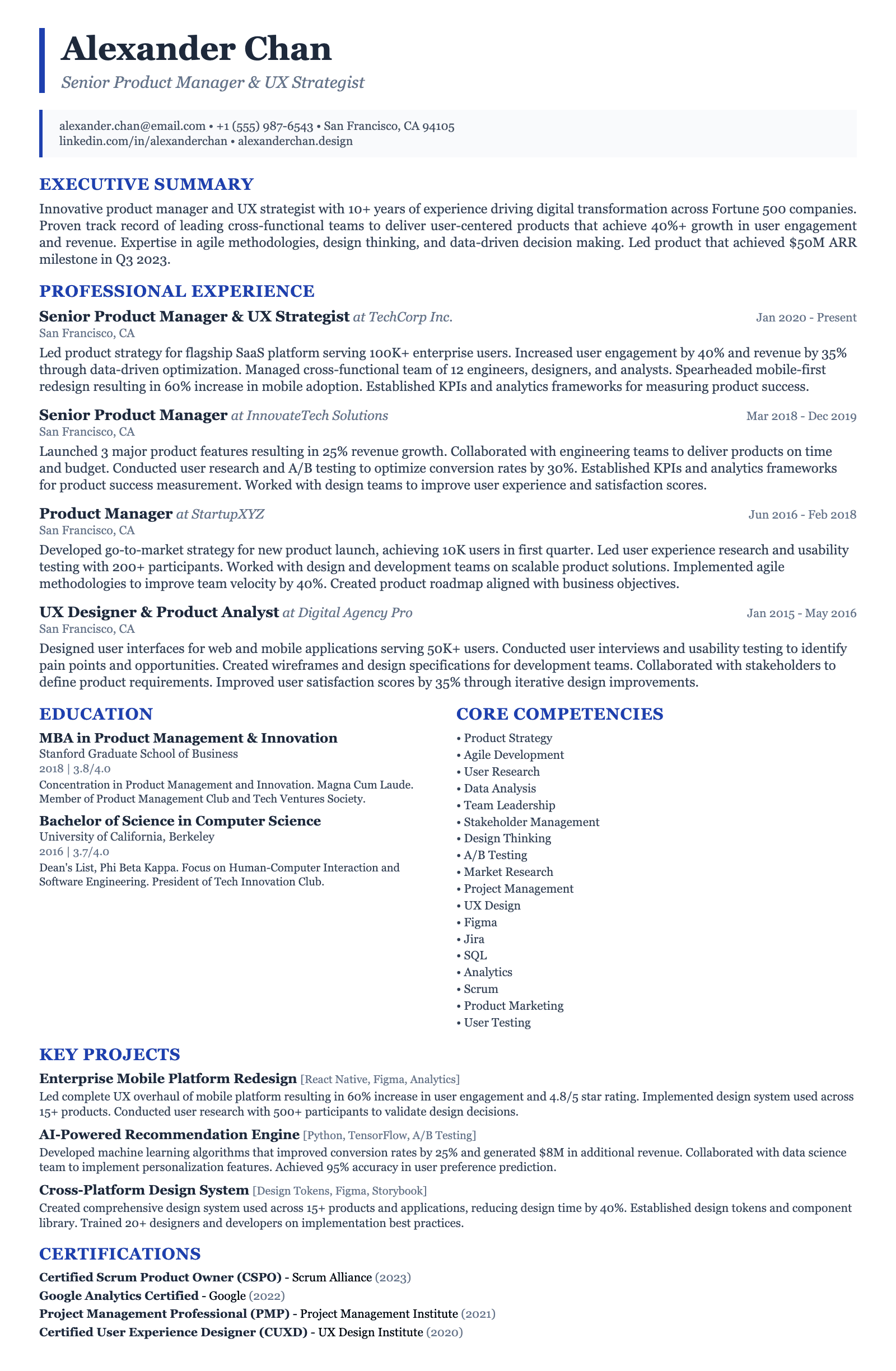
These templates are pre-configured with the headers and layout recruiters expect in the USA.


Common Questions
What is the standard resume length in the US for Recruiter?
In the United States, a one-page resume is the gold standard for anyone with less than 10 years of experience. For senior executives, two pages are acceptable, but conciseness is highly valued. Hiring managers and ATS systems expect scannable, keyword-rich content without fluff.
Should I include a photo on my Recruiter resume?
No. Never include a photo on a US resume. US companies strictly follow anti-discrimination laws (EEOC), and including a photo can lead to your resume being rejected immediately to avoid bias. Focus instead on skills, metrics, and achievements.
How do I tailor my Recruiter resume for US employers?
Tailor your resume by mirroring keywords from the job description, using US Letter (8.5" x 11") format, and leading each bullet with a strong action verb. Include quantifiable results (percentages, dollar impact, team size) and remove any personal details (photo, DOB, marital status) that are common elsewhere but discouraged in the US.
What keywords should a Recruiter resume include for ATS?
Include role-specific terms from the job posting (e.g., tools, methodologies, certifications), standard section headings (Experience, Education, Skills), and industry buzzwords. Avoid graphics, tables, or unusual fonts that can break ATS parsing. Save as PDF or DOCX for maximum compatibility.
How do I explain a career gap on my Recruiter resume in the US?
Use a brief, honest explanation (e.g., 'Career break for family' or 'Professional development') in your cover letter or a short summary line if needed. On the resume itself, focus on continuous skills and recent achievements; many US employers accept gaps when the rest of the profile is strong and ATS-friendly.
What is the ideal length for a Recruiter resume?
Generally, a one-page resume is sufficient for recruiters with less than 10 years of experience. For those with extensive experience, a two-page resume is acceptable, but ensure every detail adds value. Focus on quantifiable achievements and relevant skills. Prioritize recent and relevant experience, using concise language to highlight key accomplishments in areas like candidate sourcing, ATS management (e.g., Greenhouse, Lever), and successful placements.
What are the most important skills to highlight on a Recruiter resume?
Beyond the basics, emphasize skills like Boolean search, talent sourcing on platforms like LinkedIn Recruiter, and experience with various ATS systems (e.g., Workday, Taleo). Showcase your ability to build strong relationships with hiring managers and candidates. Data analysis skills, used to track recruitment metrics (time-to-fill, cost-per-hire), are also highly valuable. Include skills related to employer branding and diversity & inclusion initiatives if applicable.
How can I ensure my Recruiter resume is ATS-friendly?
Use a simple, clean format with clear headings like "Skills," "Experience," and "Education." Avoid tables, images, and text boxes, as these can confuse ATS systems. Use standard fonts like Arial or Times New Roman. Incorporate keywords from the job description throughout your resume. Save your resume as a .doc or .docx file, as these formats are generally ATS-compatible. Tools like Jobscan can help analyze your resume's ATS compatibility.
Are certifications valuable for a Recruiter resume?
While not always mandatory, certifications can demonstrate your commitment to professional development. Certifications like Certified Internet Recruiter (CIR), Professional in Human Resources (PHR), or Senior Professional in Human Resources (SPHR) can enhance your credibility. Mention these certifications prominently in a dedicated section or near your name. Explain briefly how these certifications have benefited your performance, mentioning specific skills gained or projects improved.
What are common mistakes to avoid on a Recruiter resume?
Avoid generic statements and focus on quantifiable achievements. Don't simply list responsibilities; showcase the impact you made. Proofread carefully for typos and grammatical errors. Ensure your contact information is accurate and up-to-date. Avoid using an unprofessional email address. Tailor your resume to each job application, highlighting the skills and experience most relevant to the specific role. Do not exaggerate your experience or skills.
How can I transition into a Recruiter role from another field?
Highlight transferable skills such as communication, organization, and project management. Emphasize any experience you have with customer service, sales, or relationship building. Take online courses or workshops in recruitment to gain relevant knowledge. Showcase any experience you have with Applicant Tracking Systems (ATS) or CRM software. Consider volunteering or interning in a recruitment-related role to gain practical experience. Network with recruiters and HR professionals to learn more about the field.
Sources: Salary and hiring insights reference NASSCOM, LinkedIn Jobs, and Glassdoor.
Our CV and resume guides are reviewed by the ResumeGyani career team for ATS and hiring-manager relevance.