

Electrical Engineer: Power Your Future in the USA
Seeking an Electrical Engineer to design, develop, and test electrical systems? This role offers incredible growth potential and the opportunity to contribute to cutting-edge projects. Craft a resume that electrifies!

Median Salary (US)
85000/per year
Range: $65k - $120k
Use strong action verbs and quantifiable results in every bullet. Recruiters and ATS both rank resumes higher when they see impact (e.g. “Increased conversion by 20%”) instead of duties.
A Day in the Life of a Electrical Engineer
A typical day for an Electrical Engineer in the US might start with reviewing project specifications and requirements for a new power distribution system. After checking emails and attending a brief team meeting to discuss progress and challenges, the engineer dives into CAD software to refine the design, ensuring it meets all safety standards and performance targets. Mid-morning could involve conducting simulations using MATLAB to analyze circuit behavior under various load conditions, followed by a meeting with the mechanical engineering team to discuss integration aspects. After lunch, the afternoon might be dedicated to troubleshooting a malfunctioning control system on a factory floor, using an oscilloscope and multimeter to pinpoint the source of the problem. The engineer then documents the findings and proposes a solution, which involves modifying the circuit and re-testing. The day concludes with preparing a progress report for the project manager and planning tasks for the following day, ensuring all deadlines are on track and potential roadblocks are addressed proactively.
Skills Matrix
Must Haves
Technical
Resume Killers (Avoid!)
Generic resume with no specific achievements
Lack of quantifiable results in project descriptions
Ignoring keywords from the job description
Typos and grammatical errors
Not highlighting relevant certifications or licenses
Typical Career Roadmap (US Market)
Top Interview Questions
Be prepared for these common questions in US tech interviews.
Q: Describe a time you had to troubleshoot a complex electrical system. What was your approach?
MediumExpert Answer:
Situation: I was tasked with diagnosing a recurring failure in a power supply unit (PSU) for a critical piece of equipment. Task: My objective was to identify the root cause of the failure and implement a permanent fix. Action: I systematically analyzed the PSU, starting with visual inspection for obvious damage. I then used an oscilloscope to examine voltage and current waveforms, and a multimeter to check component values. I identified a faulty capacitor causing instability in the voltage regulation circuit. Result: By replacing the capacitor with a higher-quality component, I resolved the failure. The equipment has operated reliably since the repair, preventing costly downtime.
Q: Explain your experience with CAD software for electrical design.
MediumExpert Answer:
I have extensive experience using AutoCAD and SolidWorks for electrical design. I've used AutoCAD to create detailed schematics, wiring diagrams, and panel layouts. In SolidWorks, I've designed 3D models of electrical enclosures and components, ensuring proper fit and clearance. I also utilize these tools for thermal analysis and simulation to optimize design performance.
Q: How do you stay updated with the latest advancements in electrical engineering?
EasyExpert Answer:
I regularly read industry publications such as IEEE Spectrum and trade journals. I also attend conferences and webinars to learn about new technologies and best practices. Furthermore, I participate in online forums and professional groups to exchange ideas and knowledge with other engineers.
Q: Describe a project where you had to work with a tight deadline. How did you manage your time and resources?
MediumExpert Answer:
Situation: I was responsible for completing the electrical design for a new product launch, with a deadline that was significantly reduced due to unforeseen circumstances. Task: My goal was to deliver the design on time without compromising quality. Action: I prioritized tasks based on criticality and dependencies. I worked closely with the team to allocate resources effectively and identified potential bottlenecks early on. I communicated progress regularly and proactively addressed any issues that arose. Result: By implementing these strategies, I successfully completed the electrical design on time and the product launched as scheduled.
Q: What are your preferred methods for testing and validating electrical systems?
MediumExpert Answer:
My preferred methods include functional testing to verify that the system meets its intended purpose, performance testing to evaluate its efficiency and reliability, and safety testing to ensure compliance with relevant standards. I utilize a range of equipment, including oscilloscopes, multimeters, spectrum analyzers, and environmental chambers, to conduct thorough testing.
Q: Explain your experience with power systems analysis.
HardExpert Answer:
I have experience performing power systems analysis using software like ETAP and SKM PowerTools. I've conducted load flow studies, short circuit analysis, and protective device coordination studies to ensure the stability and reliability of electrical grids and equipment. I'm familiar with industry standards such as IEEE 1584 for arc flash hazard analysis.
Q: Tell me about a time you made a mistake in a design. How did you handle it?
MediumExpert Answer:
Situation: During the design of a printed circuit board (PCB), I initially overlooked a crucial impedance matching requirement for a high-speed signal trace. Task: My task was to correct the design error and prevent any performance issues in the final product. Action: Upon discovering the mistake during a design review, I immediately updated the PCB layout to incorporate the necessary impedance matching components. I then ran simulations to verify the corrected design. Result: By promptly addressing the error, I prevented any potential signal integrity problems and ensured the PCB met performance specifications. This experience reinforced the importance of thorough design reviews and attention to detail.
Q: How familiar are you with cloud services and database management?
MediumExpert Answer:
While my expertise lies primarily in core electrical engineering principles, I have a working knowledge of cloud services such as AWS and Azure and understand their potential for data logging and remote monitoring of electrical systems. I'm also familiar with database management concepts and SQL for data analysis. I'm eager to expand my knowledge in these areas to leverage them for more efficient and data-driven engineering solutions.
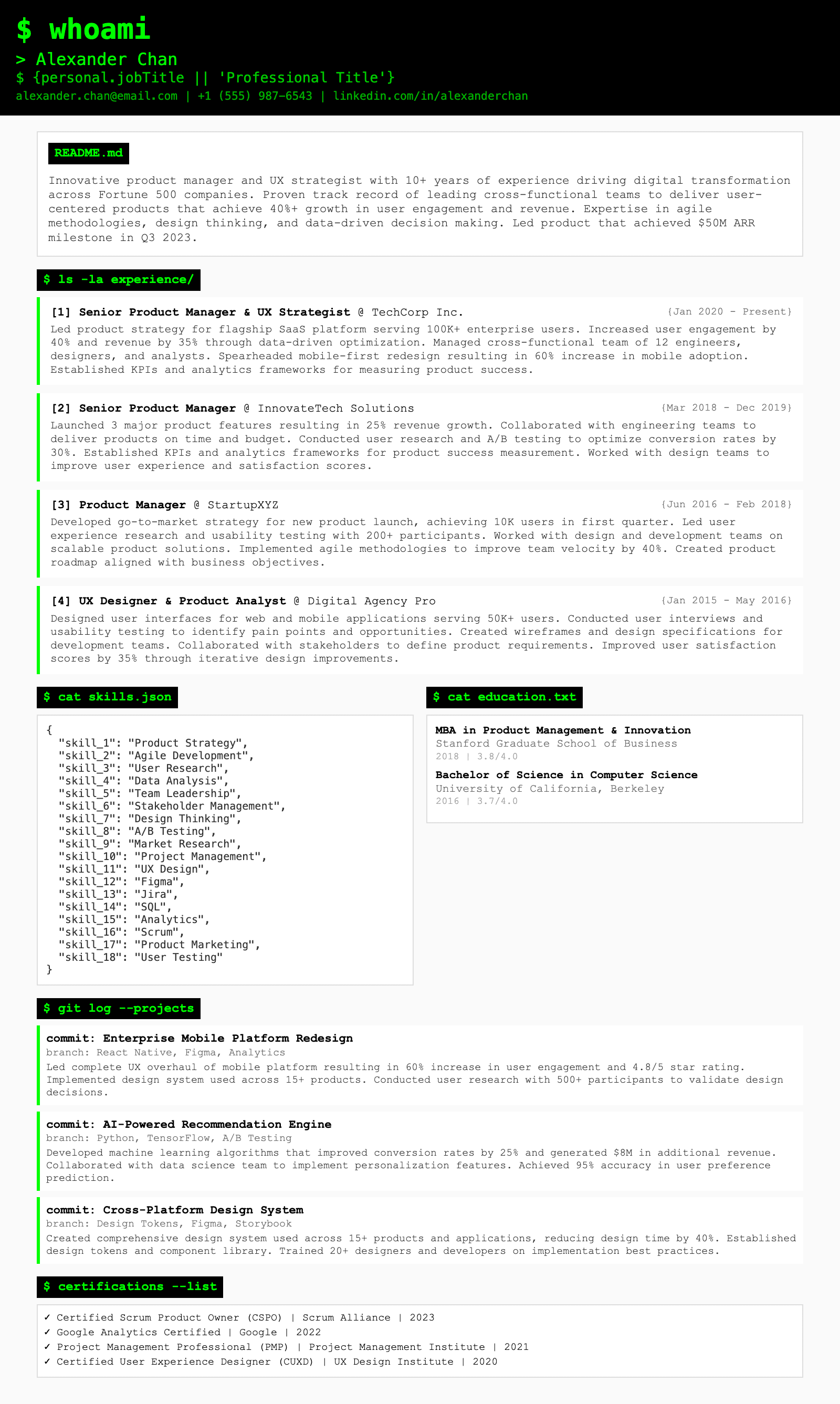
Approved Templates for Electrical Engineer
These templates are pre-configured with the headers and layout recruiters expect in the USA.


Common Questions
What is the standard resume length in the US for Electrical Engineer?
In the United States, a one-page resume is the gold standard for anyone with less than 10 years of experience. For senior executives, two pages are acceptable, but conciseness is highly valued. Hiring managers and ATS systems expect scannable, keyword-rich content without fluff.
Should I include a photo on my Electrical Engineer resume?
No. Never include a photo on a US resume. US companies strictly follow anti-discrimination laws (EEOC), and including a photo can lead to your resume being rejected immediately to avoid bias. Focus instead on skills, metrics, and achievements.
How do I tailor my Electrical Engineer resume for US employers?
Tailor your resume by mirroring keywords from the job description, using US Letter (8.5" x 11") format, and leading each bullet with a strong action verb. Include quantifiable results (percentages, dollar impact, team size) and remove any personal details (photo, DOB, marital status) that are common elsewhere but discouraged in the US.
What keywords should a Electrical Engineer resume include for ATS?
Include role-specific terms from the job posting (e.g., tools, methodologies, certifications), standard section headings (Experience, Education, Skills), and industry buzzwords. Avoid graphics, tables, or unusual fonts that can break ATS parsing. Save as PDF or DOCX for maximum compatibility.
How do I explain a career gap on my Electrical Engineer resume in the US?
Use a brief, honest explanation (e.g., 'Career break for family' or 'Professional development') in your cover letter or a short summary line if needed. On the resume itself, focus on continuous skills and recent achievements; many US employers accept gaps when the rest of the profile is strong and ATS-friendly.
What are the key skills required for an Electrical Engineer?
Key skills include circuit design, power systems analysis, testing and measurement, problem-solving, and communication. Proficiency in CAD software, MATLAB, and relevant industry standards is also essential.
What is the typical career path for an Electrical Engineer?
The typical career path starts with a junior role and progresses to senior levels, then to lead engineer, engineering manager, and eventually director of engineering. Specialization in a specific area can also lead to expert or consultant roles.
What are the common mistakes to avoid on an Electrical Engineer resume?
Avoid generic resumes, failing to quantify achievements, ignoring keywords from the job description, typos and grammatical errors, and not highlighting relevant certifications.
What types of industries hire Electrical Engineers?
Electrical Engineers are hired in various industries, including manufacturing, energy, telecommunications, aerospace, automotive, and healthcare.
What are some important certifications for Electrical Engineers?
Some important certifications include Professional Engineer (PE) license, Certified Energy Manager (CEM), and certifications related to specific software or equipment.
How important is continuing education for Electrical Engineers?
Continuing education is crucial for Electrical Engineers to stay abreast of the latest technological advancements and maintain their skills and knowledge. This can be achieved through conferences, webinars, online courses, and professional development programs.
What is the role of an Electrical Engineer in renewable energy?
Electrical Engineers play a critical role in renewable energy by designing and developing electrical systems for solar, wind, and other renewable energy sources. They also work on grid integration and energy storage solutions.
What is the difference between an Electrical Engineer and an Electronics Engineer?
While there is overlap, Electrical Engineering is broader, focusing on large-scale electrical systems and power generation/distribution. Electronics Engineering focuses more on smaller electronic circuits, components, and devices.
Sources: Salary and hiring insights reference NASSCOM, LinkedIn Jobs, and Glassdoor.
Our CV and resume guides are reviewed by the ResumeGyani career team for ATS and hiring-manager relevance.