

Craft Your Success: Carpenter Resume Guide (USA)
In the US job market, recruiters spend seconds scanning a resume. They look for impact (metrics), clear tech or domain skills, and education. This guide helps you build an ATS-friendly Carpenter resume that passes filters used by top US companies. Use US Letter size, one page for under 10 years experience, and no photo.

Median Salary (US)
51420/per year
Range: $33k - $80k
Use strong action verbs and quantifiable results in every bullet. Recruiters and ATS both rank resumes higher when they see impact (e.g. “Increased conversion by 20%”) instead of duties.
A Day in the Life of a Carpenter
The day begins early, often before sunrise, with a quick review of the project plans for the day. Safety is paramount, so a thorough site inspection is conducted to identify any potential hazards. The morning might involve framing walls for a new home, requiring precise measurements, cutting lumber with a circular saw, and securing the frame with a nail gun. After lunch, the focus could shift to installing intricate crown molding in a historic building, demanding meticulous attention to detail and the use of hand tools like chisels and planes. Throughout the day, communication with other tradespeople is constant, ensuring seamless coordination. The day concludes with cleaning the worksite, stowing tools, and preparing for the next day's tasks, leaving behind a visible testament to skill and craftsmanship. There may be some client interaction to ensure the work being done meets their expectations and satisfaction. The day is physically demanding, but the satisfaction of seeing a project come to life is immensely rewarding.
Skills Matrix
Must Haves
Technical
Resume Killers (Avoid!)
Failing to quantify accomplishments (e.g., 'Framed 20+ houses')
Omitting critical technical skills (e.g., Blueprint Reading)
Using generic resume templates lacking industry keywords
Neglecting to tailor the resume to each specific job application
Poor formatting and grammatical errors
Typical Career Roadmap (US Market)
Top Interview Questions
Be prepared for these common questions in US tech interviews.
Q: Describe a time you had to solve a complex problem on a job site.
MediumExpert Answer:
Situation: On a recent project, we discovered that the blueprints for a custom cabinet installation were incorrect, leading to misaligned measurements. Task: I needed to quickly identify the discrepancy and develop a solution to ensure the cabinets fit properly. Action: I carefully reviewed the blueprints, identified the error, and consulted with the architect to confirm the correct dimensions. I then recalculated the necessary cuts and adjustments, ensuring all measurements were accurate. Result: The cabinets were successfully installed according to the corrected specifications, preventing delays and cost overruns. The client was extremely satisfied with the outcome. Difficulty: Medium
Q: How do you ensure safety on a construction site?
EasyExpert Answer:
My top priority is always safety. I consistently wear appropriate personal protective equipment (PPE), including safety glasses, gloves, and a hard hat. I thoroughly inspect tools and equipment before each use to ensure they are in good working order. I adhere to all safety regulations and procedures, and I actively participate in safety meetings. I also proactively identify and address potential hazards, and I encourage my colleagues to do the same. I believe that a safe work environment is essential for productivity and well-being. Difficulty: Easy
Q: What experience do you have with blueprint reading?
MediumExpert Answer:
Throughout my career, I've consistently utilized blueprints to guide my work on various construction projects. I'm proficient in interpreting architectural and structural drawings, understanding symbols, dimensions, and specifications. I can accurately extract information regarding material requirements, layouts, and elevations. I've also worked with revisions and amendments to blueprints, ensuring that I'm always working with the most up-to-date information. This skill is crucial for ensuring accuracy and preventing costly errors. Difficulty: Medium
Q: Describe your experience with different types of wood.
MediumExpert Answer:
I have extensive experience working with a wide variety of wood types, including hardwoods like oak, maple, and cherry, as well as softwoods like pine, fir, and cedar. I understand the properties and characteristics of each type, including their strength, durability, workability, and resistance to moisture and decay. I can select the appropriate wood for a given application based on project requirements and budget. I also have experience with wood finishing techniques, such as staining, varnishing, and sealing. Difficulty: Medium
Q: How do you handle working under pressure and meeting deadlines?
MediumExpert Answer:
I thrive under pressure and view deadlines as opportunities to demonstrate my efficiency and problem-solving skills. I prioritize tasks based on urgency and importance, break down large projects into smaller, manageable steps, and maintain a clear focus on the desired outcome. I proactively communicate with my team to ensure everyone is on the same page and to identify any potential roadblocks. I'm also adept at adapting to changing priorities and finding creative solutions to overcome challenges. I remain calm and focused, even in stressful situations. Difficulty: Medium
Q: Tell me about a time you made a mistake on the job. What did you do?
EasyExpert Answer:
Situation: Once, while installing drywall, I miscalculated the measurements and made a cut that was too short. Task: I needed to rectify the situation quickly to avoid delaying the project. Action: I immediately informed my supervisor about the mistake. I then carefully measured the remaining area and cut a new piece of drywall to the correct dimensions. Result: The new piece fit perfectly, and the installation continued without further issues. I learned the importance of double-checking measurements and taking my time to ensure accuracy. Difficulty: Easy
Q: What is your experience with power tools vs. hand tools?
MediumExpert Answer:
I am proficient in using both power tools and hand tools. I understand the advantages and limitations of each type of tool and can select the appropriate tool for a given task based on precision, efficiency, and safety considerations. For example, I use power saws for making quick and accurate cuts on large pieces of lumber, while I use hand planes and chisels for fine-tuning and shaping intricate details. I am also skilled in maintaining and repairing both types of tools. Difficulty: Medium
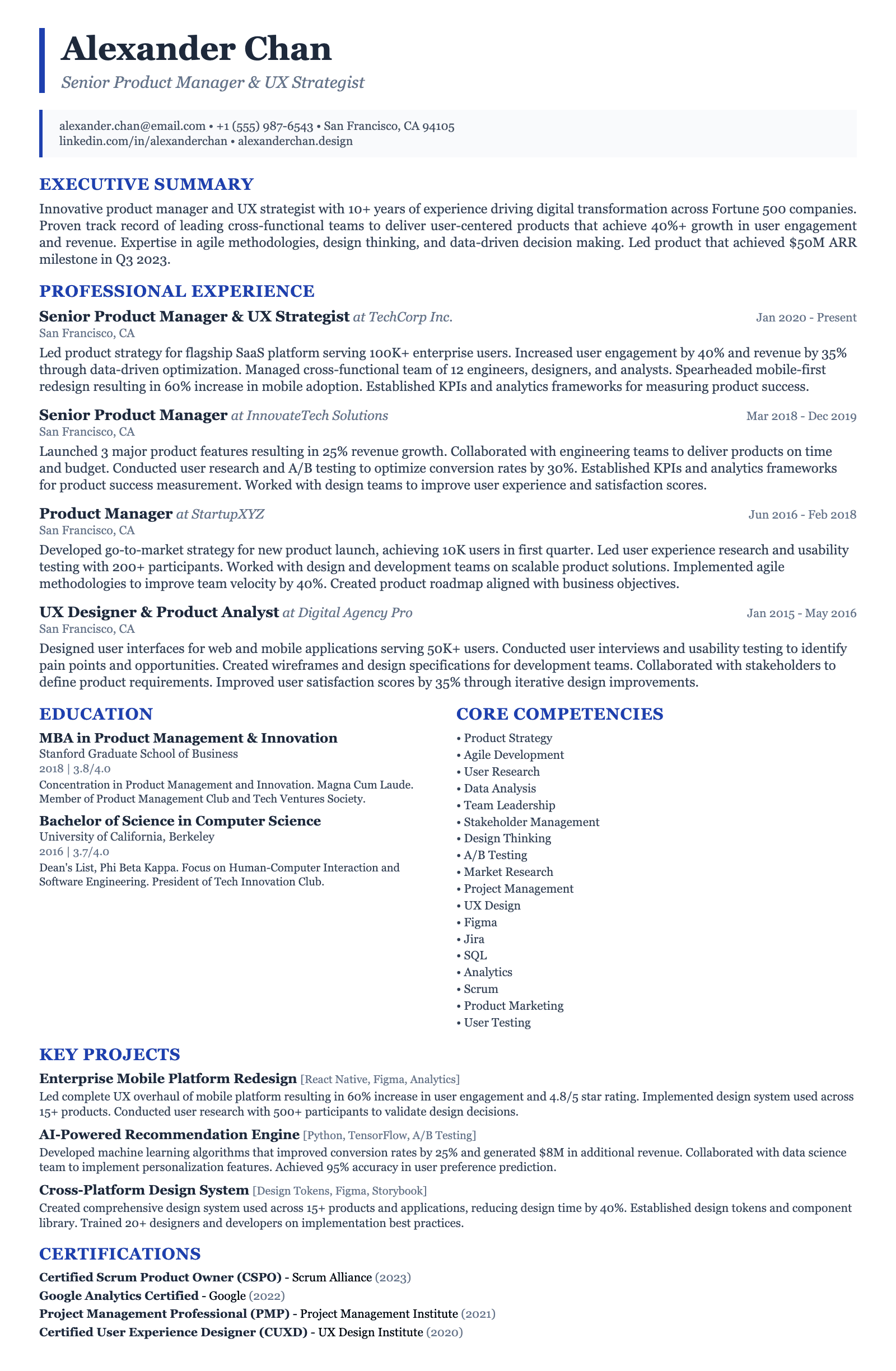
Approved Templates for Carpenter
These templates are pre-configured with the headers and layout recruiters expect in the USA.


Common Questions
What is the standard resume length in the US for Carpenter?
In the United States, a one-page resume is the gold standard for anyone with less than 10 years of experience. For senior executives, two pages are acceptable, but conciseness is highly valued. Hiring managers and ATS systems expect scannable, keyword-rich content without fluff.
Should I include a photo on my Carpenter resume?
No. Never include a photo on a US resume. US companies strictly follow anti-discrimination laws (EEOC), and including a photo can lead to your resume being rejected immediately to avoid bias. Focus instead on skills, metrics, and achievements.
How do I tailor my Carpenter resume for US employers?
Tailor your resume by mirroring keywords from the job description, using US Letter (8.5" x 11") format, and leading each bullet with a strong action verb. Include quantifiable results (percentages, dollar impact, team size) and remove any personal details (photo, DOB, marital status) that are common elsewhere but discouraged in the US.
What keywords should a Carpenter resume include for ATS?
Include role-specific terms from the job posting (e.g., tools, methodologies, certifications), standard section headings (Experience, Education, Skills), and industry buzzwords. Avoid graphics, tables, or unusual fonts that can break ATS parsing. Save as PDF or DOCX for maximum compatibility.
How do I explain a career gap on my Carpenter resume in the US?
Use a brief, honest explanation (e.g., 'Career break for family' or 'Professional development') in your cover letter or a short summary line if needed. On the resume itself, focus on continuous skills and recent achievements; many US employers accept gaps when the rest of the profile is strong and ATS-friendly.
What should I include in the skills section of my carpenter resume?
Focus on both technical and soft skills. Highlight your proficiency in blueprint reading, framing, finish carpentry, and knowledge of building codes. Also include essential soft skills like teamwork, problem-solving, and attention to detail. Tailor the skills section to match the specific requirements of the job description.
How can I showcase my experience on my carpenter resume if I don't have much experience?
Emphasize any relevant projects you've worked on, even if they were personal projects or volunteer work. Highlight your skills and training, and focus on your eagerness to learn and contribute to the team. Consider including a portfolio showcasing your craftsmanship.
What is the best resume format for a carpenter resume?
The chronological format is generally recommended, as it highlights your work history and progression. However, if you have gaps in your employment history or are changing careers, a functional or combination format may be more suitable. Choose the format that best showcases your strengths and relevant experience.
Should I include a resume objective or summary?
A resume summary is generally preferred over an objective. A summary provides a brief overview of your skills and experience, highlighting your key qualifications and career goals. Tailor your summary to match the specific requirements of the job description.
How long should my carpenter resume be?
Ideally, your resume should be one to two pages long. Focus on including the most relevant and impactful information, and avoid unnecessary details or fluff.
What are some keywords I should include in my carpenter resume?
Include keywords such as 'carpentry,' 'framing,' 'finish carpentry,' 'blueprint reading,' 'building codes,' 'power tools,' 'hand tools,' 'construction,' 'installation,' and 'repair.' Also, incorporate specific tools and materials you are proficient with.
Is it important to tailor my resume to each job application?
Absolutely! Tailoring your resume to each job application is crucial for demonstrating your interest in the specific role and highlighting your relevant skills and experience. Review the job description carefully and adjust your resume accordingly.
Should I include references on my carpenter resume?
It's generally not necessary to include references directly on your resume. Instead, you can state that references are available upon request.
Sources: Salary and hiring insights reference NASSCOM, LinkedIn Jobs, and Glassdoor.
Our CV and resume guides are reviewed by the ResumeGyani career team for ATS and hiring-manager relevance.