

Plumber Resume Format (US Edition)
In the US job market, recruiters spend seconds scanning a resume. They look for impact (metrics), clear tech or domain skills, and education. This guide helps you build an ATS-friendly Plumber resume that passes filters used by top US companies. Use US Letter size, one page for under 10 years experience, and no photo.

Salary Range
$60k - $120k
Use strong action verbs and quantifiable results in every bullet. Recruiters and ATS both rank resumes higher when they see impact (e.g. “Increased conversion by 20%”) instead of duties.
A Day in the Life of a Plumber
A Plumber's day often begins with reviewing scheduled service calls and prioritizing emergencies, such as burst pipes or gas leaks. Using a company vehicle stocked with tools like pipe wrenches, soldering torches, and drain snakes, the plumber travels to residential or commercial locations. On-site, they diagnose plumbing issues, provide cost estimates to clients, and then perform necessary repairs or installations. This might involve cutting and threading pipes, installing fixtures like toilets and sinks, or troubleshooting complex drainage systems. Plumbers regularly consult blueprints and building codes to ensure compliance. Documentation, including invoices and service reports created with software like ServiceTitan, is crucial. The day concludes with restocking the van, ordering supplies, and preparing for the next day's assignments.
Skills Matrix
Must Haves
Technical
Resume Killers (Avoid!)
Listing only job duties without quantifiable achievements or impact.
Using a generic resume for every Plumber application instead of tailoring to the job.
Including irrelevant or outdated experience that dilutes your message.
Using complex layouts, graphics, or columns that break ATS parsing.
Leaving gaps unexplained or using vague dates.
Writing a long summary or objective instead of a concise, achievement-focused one.
Typical Career Roadmap (US Market)
Top Interview Questions
Be prepared for these common questions in US tech interviews.
Q: Describe a time you had to troubleshoot a complex plumbing problem under pressure. What was your approach, and what was the outcome?
MediumExpert Answer:
In a high-pressure situation, clear thinking is key. Once, I was called to a restaurant during peak hours for a complete kitchen drain blockage. I quickly assessed the situation, identified the main access point, and used a combination of a drain snake and hydro-jetting to clear the blockage. Communication with the restaurant manager was crucial to minimize disruption. The problem was resolved within an hour, preventing a significant loss of business for the restaurant.
Q: How do you stay updated with the latest plumbing codes and regulations?
EasyExpert Answer:
Staying current is crucial in plumbing. I regularly attend industry workshops and seminars offered by organizations like the Plumbing-Heating-Cooling Contractors Association (PHCC). I also subscribe to trade publications and online resources that provide updates on code changes and new technologies. Additionally, I actively participate in continuing education courses to maintain my certifications and expand my knowledge base.
Q: Explain your experience with different types of plumbing materials, such as PVC, copper, and PEX.
TechnicalExpert Answer:
I have extensive experience working with various plumbing materials. With PVC, I'm proficient in cutting, gluing, and installing drainage systems. I'm skilled in soldering and brazing copper pipes for water supply lines, ensuring leak-free connections. I also have considerable experience with PEX piping, including crimping and expansion methods, which I've used in both residential and commercial settings. My material selection is always guided by project requirements and code compliance.
Q: Tell me about a time you had to deal with a difficult or demanding customer.
MediumExpert Answer:
I approach challenging customer interactions with empathy and professionalism. Once, a homeowner was upset about the cost of a repair. I patiently explained the problem, the necessary steps to fix it, and the associated costs in detail. I also offered alternative solutions and financing options. By actively listening and addressing their concerns, I was able to build trust and ultimately complete the job to their satisfaction.
Q: Describe your experience with reading and interpreting blueprints and technical drawings.
TechnicalExpert Answer:
Blueprint reading is a fundamental skill for a plumber. I can accurately interpret architectural and engineering drawings to understand plumbing layouts, pipe sizes, and fixture locations. I use blueprints to plan installations, identify potential conflicts, and ensure compliance with building codes. I am also proficient in using CAD software to create or modify plumbing drawings when necessary.
Q: How do you prioritize safety on a plumbing job site?
EasyExpert Answer:
Safety is always my top priority. I start by conducting a thorough hazard assessment before beginning any work. I always wear appropriate personal protective equipment (PPE), such as safety glasses, gloves, and steel-toed boots. I follow lockout/tagout procedures when working on electrical or mechanical systems. I ensure that all tools and equipment are in good working condition, and I adhere to all OSHA safety regulations. If I identify a safety hazard, I immediately take steps to mitigate it and report it to my supervisor.
ATS Optimization Tips for Plumber
Use exact keywords from the job description, such as specific plumbing codes (UPC, IPC), types of pipes (PVC, copper, PEX), and plumbing systems (drainage, water supply).
Format your skills section with keywords that ATS systems recognize, like "Pipefitting," "Soldering," "Drain Cleaning," and "Blueprint Reading."
Include a skills matrix summarizing your core competencies. List technical skills (e.g., "Backflow Prevention," "Medical Gas Piping") and soft skills (e.g., "Communication," "Problem-Solving").
Use standard section headings like "Work Experience," "Skills," "Certifications," and "Education." Avoid creative or unconventional titles.
Quantify your accomplishments whenever possible. For example, "Installed and maintained plumbing systems in 20+ residential buildings," or "Reduced water waste by 10% through efficient fixture installations."
Optimize your resume file name. Use a simple and professional file name, such as "FirstName_LastName_PlumberResume.pdf".
Submit your resume in a format that is easily readable by ATS systems. Typically, .doc or .pdf formats are preferred. Avoid submitting image-based or scanned resumes.
Ensure your contact information is accurate and up-to-date. Include your phone number, email address, and LinkedIn profile URL.
Approved Templates for Plumber
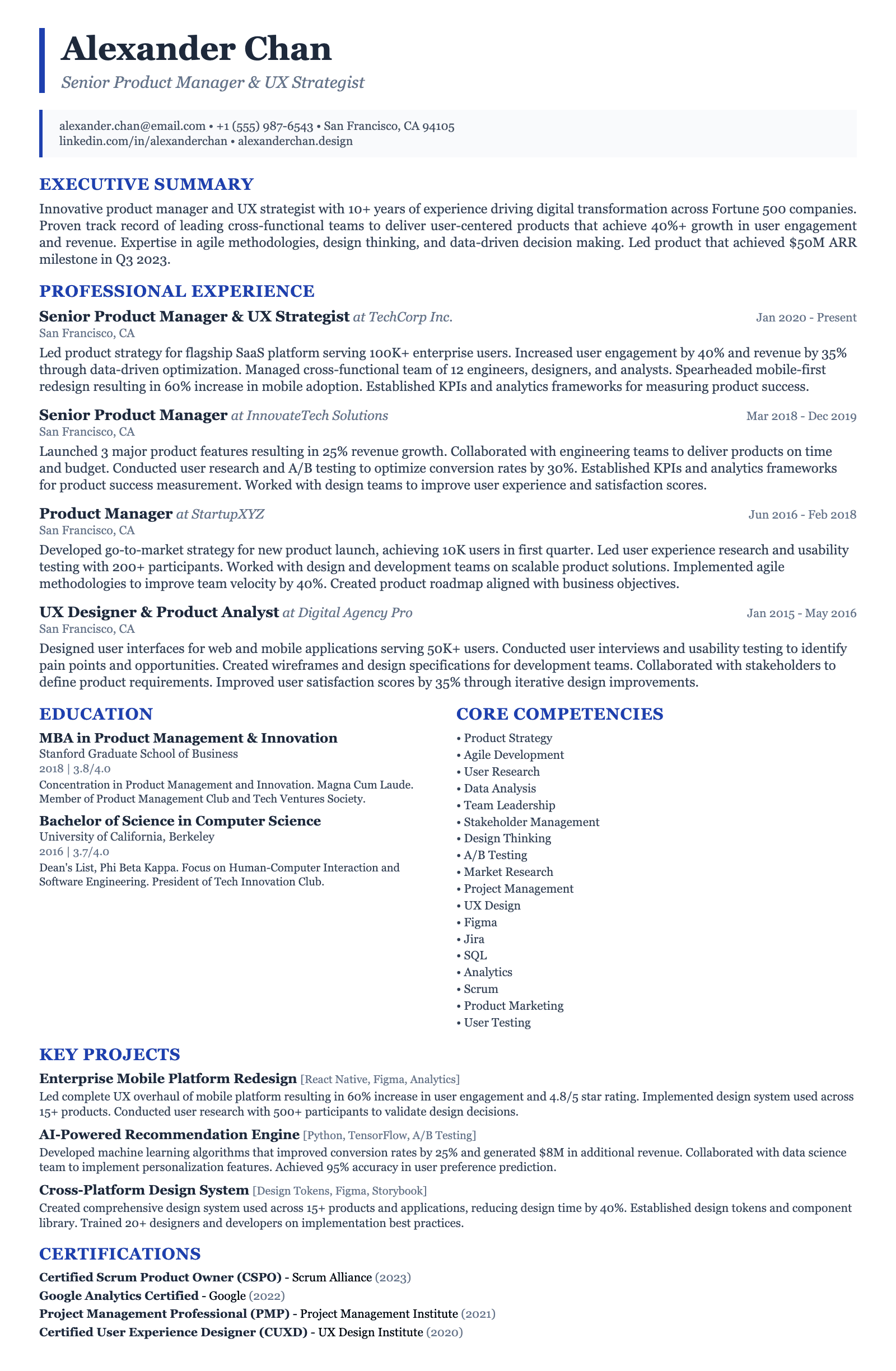
These templates are pre-configured with the headers and layout recruiters expect in the USA.


Common Questions
What is the standard resume length in the US for Plumber?
In the United States, a one-page resume is the gold standard for anyone with less than 10 years of experience. For senior executives, two pages are acceptable, but conciseness is highly valued. Hiring managers and ATS systems expect scannable, keyword-rich content without fluff.
Should I include a photo on my Plumber resume?
No. Never include a photo on a US resume. US companies strictly follow anti-discrimination laws (EEOC), and including a photo can lead to your resume being rejected immediately to avoid bias. Focus instead on skills, metrics, and achievements.
How do I tailor my Plumber resume for US employers?
Tailor your resume by mirroring keywords from the job description, using US Letter (8.5" x 11") format, and leading each bullet with a strong action verb. Include quantifiable results (percentages, dollar impact, team size) and remove any personal details (photo, DOB, marital status) that are common elsewhere but discouraged in the US.
What keywords should a Plumber resume include for ATS?
Include role-specific terms from the job posting (e.g., tools, methodologies, certifications), standard section headings (Experience, Education, Skills), and industry buzzwords. Avoid graphics, tables, or unusual fonts that can break ATS parsing. Save as PDF or DOCX for maximum compatibility.
How do I explain a career gap on my Plumber resume in the US?
Use a brief, honest explanation (e.g., 'Career break for family' or 'Professional development') in your cover letter or a short summary line if needed. On the resume itself, focus on continuous skills and recent achievements; many US employers accept gaps when the rest of the profile is strong and ATS-friendly.
How long should my Plumber resume be?
For most plumbers, a one-page resume is sufficient. Focus on showcasing your most relevant skills and experience. If you have extensive experience (10+ years) or multiple certifications (e.g., Master Plumber, backflow prevention), a two-page resume may be acceptable. Prioritize quantifiable achievements and use action verbs to demonstrate your impact. Avoid unnecessary details and tailor your resume to each job application.
What are the most important skills to highlight on my Plumber resume?
Beyond core plumbing skills, emphasize skills relevant to customer interaction and problem-solving. Include technical skills like pipefitting, soldering, drain cleaning, and fixture installation. Soft skills are crucial: communication, problem-solving, and customer service. Certifications like backflow prevention, OSHA safety training, and specific pipe welding certifications significantly enhance your resume. Mention experience with tools like pipe threaders, augers, and leak detection equipment.
How can I make my Plumber resume ATS-friendly?
ATS systems scan for specific keywords and formatting. Use a clean, chronological resume format. Avoid tables, graphics, and unusual fonts. Use standard section headings like "Experience," "Skills," and "Certifications." Incorporate industry-specific keywords found in job descriptions, such as "pipefitting," "drainage systems," "blueprint reading," and specific types of plumbing (e.g., "residential plumbing," "commercial plumbing"). Save your resume as a .doc or .pdf unless instructed otherwise.
Which certifications should I include on my Plumber resume?
List all relevant plumbing certifications prominently. This includes your Journeyman or Master Plumber license, backflow prevention certification, medical gas piping certification, and any specialized welding certifications. OSHA safety training (e.g., OSHA 10 or OSHA 30) is highly valuable. Certifications in specific plumbing technologies, like PEX piping or trenchless sewer repair, demonstrate specialized expertise and can make your resume stand out.
What are common mistakes to avoid on a Plumber resume?
Avoid generic resumes that lack specific details. Quantify your accomplishments whenever possible (e.g., "Reduced water waste by 15% through efficient fixture installations"). Neglecting to proofread for errors is a major mistake. Ensure your contact information is accurate and professional. Avoid using outdated or irrelevant information, such as skills or experience from unrelated industries. Not tailoring your resume to each job posting is a crucial error.
How do I transition to a Plumber role from a different career?
Highlight transferable skills from your previous role, such as problem-solving, customer service, and manual dexterity. Emphasize any relevant training or certifications you've obtained. If you've completed an apprenticeship or vocational program, showcase the skills you acquired. Consider including a brief summary statement explaining your career transition and your passion for plumbing. Focus on your willingness to learn and your commitment to providing excellent service.
Sources: Salary and hiring insights reference NASSCOM, LinkedIn Jobs, and Glassdoor.
Our CV and resume guides are reviewed by the ResumeGyani career team for ATS and hiring-manager relevance.