

Electrician Resume USA: Power Up Your Career!
Craft a powerful electrician resume that illuminates your skills and experience. This guide provides everything you need to land your dream job in the electrical field, from highlighting technical expertise to mastering the interview process.

Median Salary (US)
60020/per year
Range: $40k - $85k
Use strong action verbs and quantifiable results in every bullet. Recruiters and ATS both rank resumes higher when they see impact (e.g. “Increased conversion by 20%”) instead of duties.
A Day in the Life of a Electrician
The day begins early, often with a team meeting to review the day's tasks and safety protocols. Armed with blueprints and a well-stocked tool bag, the electrician heads to the job site. The morning might involve installing new wiring in a residential home, carefully running conduit and connecting outlets. After lunch, the focus shifts to a commercial building, troubleshooting a malfunctioning lighting system. Using a multimeter, the electrician diagnoses a faulty ballast and replaces it. The afternoon also includes a customer interaction, explaining the repairs and answering questions. The day ends with documenting the work performed and preparing for the next day's challenges. Constant learning and adaptation are key, as no two days are ever exactly alike. Safety is paramount, with regular checks of equipment and adherence to strict procedures to prevent accidents.
Skills Matrix
Must Haves
Technical
Resume Killers (Avoid!)
Failing to quantify achievements. Electricians often describe tasks without showcasing the impact, leading to a weak resume. For example, instead of 'Performed wiring repairs,' say 'Completed 20+ wiring repairs per week, minimizing downtime for critical equipment.'
Omitting relevant certifications and licenses. Not including these details can lead to automatic rejection by ATS. Specify the type, issuing organization, and expiration date (if applicable).
Using vague language and avoiding technical terminology. The resume should demonstrate expertise in electrical systems. Avoid generic terms and use specific language related to electrical codes and standards.
Not tailoring the resume to the specific job. Sending a generic resume decreases the chances of matching the specific requirements. Always adjust the content to highlight the most relevant skills and experience.
Neglecting to highlight safety record. Safety is paramount. Failing to mention safety training or a clean safety record is a significant oversight. Include OSHA certifications and any safety awards.
Poor formatting and readability. A cluttered or poorly formatted resume makes it difficult for recruiters and ATS to quickly identify key qualifications. Use clear headings, bullet points, and white space.
Listing only responsibilities instead of accomplishments. Focus on what you achieved in each role, not just what you were assigned to do. Use action verbs to start each bullet point and quantify results whenever possible.
Ignoring soft skills. While technical skills are crucial, electricians need communication and problem-solving abilities. Failing to highlight these skills can make you appear less well-rounded. Provide specific examples of these skills.
Typical Career Roadmap (US Market)
Top Interview Questions
Be prepared for these common questions in US tech interviews.
Q: Describe a time you had to troubleshoot a complex electrical problem under pressure.
MediumExpert Answer:
Situation: I was called to a commercial building experiencing a complete power outage on a critical circuit affecting their data servers. Task: My task was to quickly diagnose the issue and restore power to the servers to minimize downtime. Action: I systematically checked the circuit breakers, transformers, and wiring, using a multimeter to identify the point of failure. I discovered a short circuit caused by damaged insulation within a junction box. I carefully repaired the wiring, replaced the damaged junction box, and tested the circuit to ensure it was functioning properly. Result: I restored power to the servers within two hours, preventing significant data loss and financial impact for the company. The client was extremely grateful for my quick and efficient response.
Q: How do you stay up-to-date with the latest changes in the National Electrical Code (NEC)?
EasyExpert Answer:
I regularly attend professional development courses and workshops offered by organizations like the National Fire Protection Association (NFPA) and the Independent Electrical Contractors (IEC). I also subscribe to industry publications and online resources to stay informed about code updates and best practices. Furthermore, I actively participate in local electrical trade associations to network with other professionals and share knowledge.
Q: Explain your experience with different types of electrical systems (e.g., residential, commercial, industrial).
MediumExpert Answer:
Throughout my career, I've gained experience working with a variety of electrical systems. In residential settings, I've installed wiring, lighting, and appliances, ensuring compliance with local codes. In commercial buildings, I've worked on power distribution systems, lighting controls, and fire alarm systems. I also have experience with industrial electrical systems, including motor controls, programmable logic controllers (PLCs), and high-voltage equipment. I understand the unique challenges and requirements of each type of system.
Q: Describe a time when you had to work with a difficult customer.
MediumExpert Answer:
Situation: I was working on a residential wiring project when the homeowner became upset about the placement of a new outlet. He felt it was not aesthetically pleasing. Task: My task was to address his concerns and find a solution that satisfied both his aesthetic preferences and the electrical code requirements. Action: I carefully listened to his concerns and explained the reasons for the initial placement, highlighting safety and functionality. I then explored alternative locations for the outlet, taking into consideration his preferences and the electrical code. Result: We agreed on a new location that met his aesthetic requirements while still complying with safety regulations. He was pleased with the outcome, and I maintained a positive working relationship throughout the project.
Q: How do you ensure safety on the job site?
EasyExpert Answer:
Safety is my top priority on any job site. I always conduct a thorough risk assessment before starting work, identifying potential hazards and implementing appropriate safety measures. I wear appropriate personal protective equipment (PPE), such as safety glasses, gloves, and hard hats. I follow lockout/tagout procedures to prevent accidental energization of equipment. I also communicate effectively with my team members and other trades professionals to ensure everyone is aware of potential hazards. I never compromise safety for speed or convenience.
Q: What are your strengths and weaknesses as an electrician?
MediumExpert Answer:
My strengths include my strong technical skills, my problem-solving abilities, and my commitment to safety. I am also a reliable and hardworking team player. One area where I am continuously improving is my project management skills. I am taking courses and seeking opportunities to further develop my ability to plan, organize, and execute electrical projects efficiently.
Q: Why are you interested in this particular electrician position?
EasyExpert Answer:
I am interested in this position because it aligns perfectly with my skills and experience. I am particularly drawn to [Company Name]'s reputation for [positive attribute, e.g., innovation, quality workmanship, employee development]. I am also excited about the opportunity to work on [specific type of project mentioned in the job description]. I believe my strong technical skills, my commitment to safety, and my ability to work effectively as part of a team would make me a valuable asset to your organization.
ATS Optimization Tips for Electrician
Quantify your achievements whenever possible. Instead of saying 'Improved efficiency,' state 'Improved efficiency by 15% resulting in $10,000 annual savings,' which helps ATS parse results.
Incorporate relevant certifications and licenses prominently, such as 'Journeyman Electrician License' or 'Master Electrician License,' in a dedicated 'Certifications' section for improved keyword matching.
Use industry-standard terminology from the National Electrical Code (NEC) throughout your resume, as ATS algorithms often search for specific codes and regulations.
Format your work experience using a consistent structure, including the company name, location, job title, dates of employment, and a bulleted list of responsibilities and accomplishments. ATS systems prefer this format.
Optimize your resume with keywords related to electrical systems and equipment, such as 'Programmable Logic Controllers (PLCs),' 'Variable Frequency Drives (VFDs),' and 'Generators,' to match job descriptions accurately.
Include a skills section listing both technical and soft skills relevant to the electrician role. Examples are: 'Electrical Troubleshooting', 'Blueprint Reading', 'Safety Consciousness', and 'Customer Service'.
Save your resume as a PDF to preserve formatting and ensure that the ATS can accurately parse the content. Some systems struggle with other file formats.
Tailor your resume to each specific job application by adjusting keywords and highlighting relevant experience. Analyze the job description for specific requirements and incorporate them into your resume.
Approved Templates for Electrician
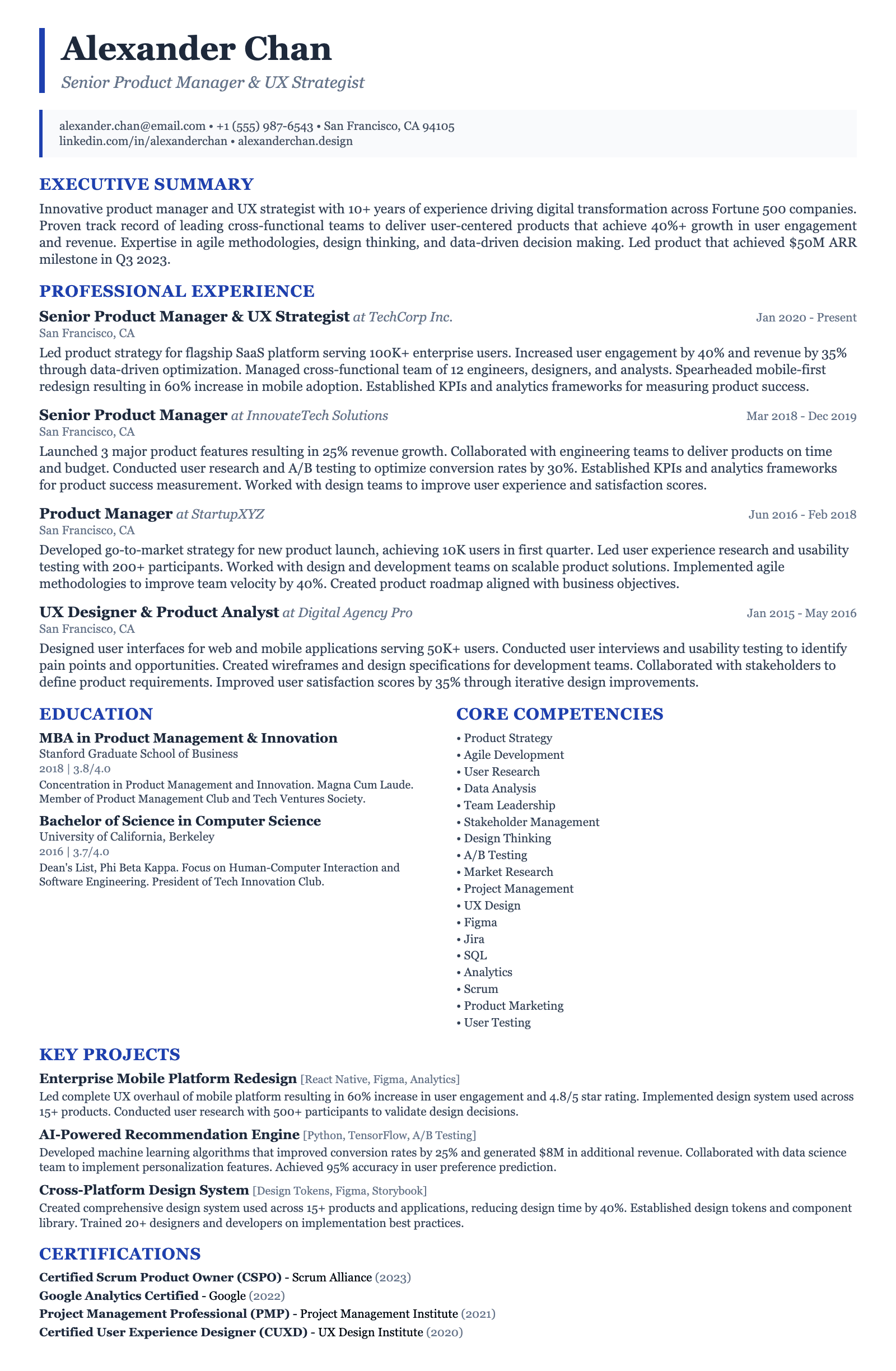
These templates are pre-configured with the headers and layout recruiters expect in the USA.


Common Questions
What is the standard resume length in the US for Electrician?
In the United States, a one-page resume is the gold standard for anyone with less than 10 years of experience. For senior executives, two pages are acceptable, but conciseness is highly valued. Hiring managers and ATS systems expect scannable, keyword-rich content without fluff.
Should I include a photo on my Electrician resume?
No. Never include a photo on a US resume. US companies strictly follow anti-discrimination laws (EEOC), and including a photo can lead to your resume being rejected immediately to avoid bias. Focus instead on skills, metrics, and achievements.
How do I tailor my Electrician resume for US employers?
Tailor your resume by mirroring keywords from the job description, using US Letter (8.5" x 11") format, and leading each bullet with a strong action verb. Include quantifiable results (percentages, dollar impact, team size) and remove any personal details (photo, DOB, marital status) that are common elsewhere but discouraged in the US.
What keywords should a Electrician resume include for ATS?
Include role-specific terms from the job posting (e.g., tools, methodologies, certifications), standard section headings (Experience, Education, Skills), and industry buzzwords. Avoid graphics, tables, or unusual fonts that can break ATS parsing. Save as PDF or DOCX for maximum compatibility.
How do I explain a career gap on my Electrician resume in the US?
Use a brief, honest explanation (e.g., 'Career break for family' or 'Professional development') in your cover letter or a short summary line if needed. On the resume itself, focus on continuous skills and recent achievements; many US employers accept gaps when the rest of the profile is strong and ATS-friendly.
What certifications are important for an electrician?
Relevant certifications include a Journeyman Electrician license, a Master Electrician license, and specialized certifications such as those offered by the National Fire Protection Association (NFPA) or the International Code Council (ICC).
How can I improve my chances of getting an electrician job?
Gain hands-on experience through apprenticeships or vocational training programs. Obtain relevant certifications and licenses. Network with other electricians and industry professionals. Tailor your resume and cover letter to each specific job application. Practice your interview skills.
What are the essential tools for an electrician?
Essential tools include multimeters, voltage testers, wire strippers, pliers, screwdrivers, conduit benders, power drills, hole saws, fish tape, and ladders. A well-stocked tool bag is crucial for any electrician.
What is the National Electrical Code (NEC)?
The National Electrical Code (NEC) is a widely adopted standard for the safe installation of electrical wiring and equipment in the United States. It is updated every three years and provides comprehensive guidelines for electrical installations.
What is the difference between a Journeyman and a Master Electrician?
A Journeyman Electrician has completed an apprenticeship and is qualified to perform electrical work under the supervision of a Master Electrician. A Master Electrician has more experience and knowledge and is qualified to plan, design, and supervise electrical projects independently.
What safety precautions should electricians always follow?
Always wear appropriate personal protective equipment (PPE), such as safety glasses, gloves, and hard hats. Follow lockout/tagout procedures to prevent accidental energization of equipment. Use insulated tools when working with live circuits. Be aware of potential hazards, such as electrical shock and arc flash. Never work alone in hazardous environments.
How important is continuing education for electricians?
Continuing education is crucial for electricians to stay up-to-date with the latest changes in the National Electrical Code (NEC), new technologies, and best practices. It also allows them to specialize in specific areas, such as renewable energy or smart home automation.
What are some common electrical hazards?
Common electrical hazards include electrical shock, arc flash, electrocution, and fire. These hazards can be caused by faulty wiring, damaged equipment, or improper use of electrical tools.
Sources: Salary and hiring insights reference NASSCOM, LinkedIn Jobs, and Glassdoor.
Our CV and resume guides are reviewed by the ResumeGyani career team for ATS and hiring-manager relevance.