

Nanny Resume Format (US Edition)
In the US job market, recruiters spend seconds scanning a resume. They look for impact (metrics), clear tech or domain skills, and education. This guide helps you build an ATS-friendly Nanny resume that passes filters used by top US companies. Use US Letter size, one page for under 10 years experience, and no photo.

Salary Range
$60k - $120k
Use strong action verbs and quantifiable results in every bullet. Recruiters and ATS both rank resumes higher when they see impact (e.g. “Increased conversion by 20%”) instead of duties.
A Day in the Life of a Nanny
A Nanny's day begins with reviewing the family's schedule and coordinating activities. Morning tasks often involve preparing breakfast, dressing the children, and engaging them in educational games or outdoor play. Nannies handle school drop-offs and pick-ups, ensuring the children's safety and punctuality. During the day, they plan and execute age-appropriate activities like arts and crafts, reading, or outings to parks or museums. Nannies also manage meal preparation, ensuring nutritional needs are met, and maintain a clean and organized play area. Communication with parents is crucial, often through daily logs or brief check-ins using apps like Google Calendar or shared notes. The day concludes with assisting in homework, preparing dinner, and managing bedtime routines. Nannies often use project management tools like Trello to coordinate schedules and activities.
Skills Matrix
Must Haves
Technical
Resume Killers (Avoid!)
Listing only job duties without quantifiable achievements or impact.
Using a generic resume for every Nanny application instead of tailoring to the job.
Including irrelevant or outdated experience that dilutes your message.
Using complex layouts, graphics, or columns that break ATS parsing.
Leaving gaps unexplained or using vague dates.
Writing a long summary or objective instead of a concise, achievement-focused one.
Typical Career Roadmap (US Market)
Top Interview Questions
Be prepared for these common questions in US tech interviews.
Q: Describe a time you handled a challenging situation with a child. What was the situation, what did you do, and what was the outcome?
MediumExpert Answer:
In one instance, a child under my care became extremely upset during a thunderstorm, displaying signs of anxiety. I calmly acknowledged their feelings, reassured them that they were safe, and distracted them with a favorite book and calming music. I also explained the science behind thunderstorms in a simple way to alleviate their fear. Eventually, the child calmed down and even started enjoying the storm. This experience taught me the importance of empathy and creative problem-solving in childcare.
Q: What strategies do you use to ensure the safety of children under your care?
EasyExpert Answer:
Safety is my top priority. I always conduct a thorough safety check of the environment, removing any potential hazards. I strictly adhere to the family's rules and guidelines regarding safety protocols. I am vigilant in supervising children, especially during activities like swimming or playing outdoors. I am certified in CPR and First Aid and prepared to handle any medical emergencies. I also educate children about safety rules in an age-appropriate manner, encouraging them to be aware of their surroundings.
Q: How do you handle disagreements or conflicts between children?
MediumExpert Answer:
When children disagree, I first ensure their safety and separate them if necessary. I then listen to each child's perspective without interruption, encouraging them to express their feelings calmly. I help them identify the root cause of the conflict and guide them towards finding a mutually agreeable solution. I facilitate a discussion where they can understand each other's viewpoints and learn to compromise. My goal is to teach them conflict resolution skills that they can use in future situations.
Q: Describe your experience with meal preparation for children with allergies or dietary restrictions.
TechnicalExpert Answer:
I have experience preparing meals for children with various allergies and dietary restrictions, including gluten intolerance and nut allergies. I carefully review ingredient labels to ensure they are safe for the child. I maintain a strict separation of utensils and cooking surfaces to prevent cross-contamination. I am knowledgeable about alternative ingredients and can create nutritious and appealing meals that meet the child's specific needs. I also communicate closely with parents to stay informed about any changes in the child's dietary requirements.
Q: How do you incorporate educational activities into your daily routine with children?
MediumExpert Answer:
I believe in making learning fun and engaging. I incorporate educational activities into the daily routine based on the child's age and interests. For younger children, I use games, songs, and storytelling to teach basic concepts like colors, shapes, and numbers. For older children, I assist with homework, encourage reading, and engage them in activities that promote critical thinking and problem-solving skills. I also utilize resources like educational websites and apps to supplement learning.
Q: Imagine the parents have given you conflicting instructions on how to handle a particular situation. How would you resolve this?
HardExpert Answer:
In such a situation, my priority would be the child's well-being and following the safest course of action. I would immediately contact both parents to clarify their instructions and understand the reasons behind their differing opinions. I would explain the situation calmly and respectfully, highlighting any potential risks or benefits of each approach. If a consensus cannot be reached quickly, I would defer to the instruction that prioritizes the child's safety and well-being, documenting my decision and the reasons behind it for future reference.
ATS Optimization Tips for Nanny
Use exact keywords from the job description, especially for skills like “infant care,” “meal preparation,” or “homework assistance.” ATS systems prioritize candidates whose resumes closely match the job requirements.
Format your resume with clear headings like "Experience," "Skills," and "Education." This helps the ATS parse the information accurately and ensures key sections are recognized.
In your experience section, use action verbs to describe your responsibilities and achievements. For example, instead of "Responsible for meal preparation," write "Prepared nutritious meals for children, accommodating dietary restrictions and allergies."
Include a skills section that lists both hard and soft skills relevant to the Nanny role. Hard skills might include CPR certification or experience with specific age groups, while soft skills could be communication or adaptability.
Quantify your achievements whenever possible. For example, "Managed after-school activities for two children, resulting in a 20% improvement in their homework completion rate."
Use a standard font like Arial or Times New Roman, and avoid using tables or graphics that can confuse the ATS. Stick to a simple, clean layout for optimal readability.
Save your resume as a PDF to preserve formatting across different systems. However, ensure that the text is selectable so that the ATS can parse the information.
Tailor your resume to each job application by highlighting the skills and experience most relevant to the specific role. This shows the employer that you've taken the time to understand their needs.
Approved Templates for Nanny
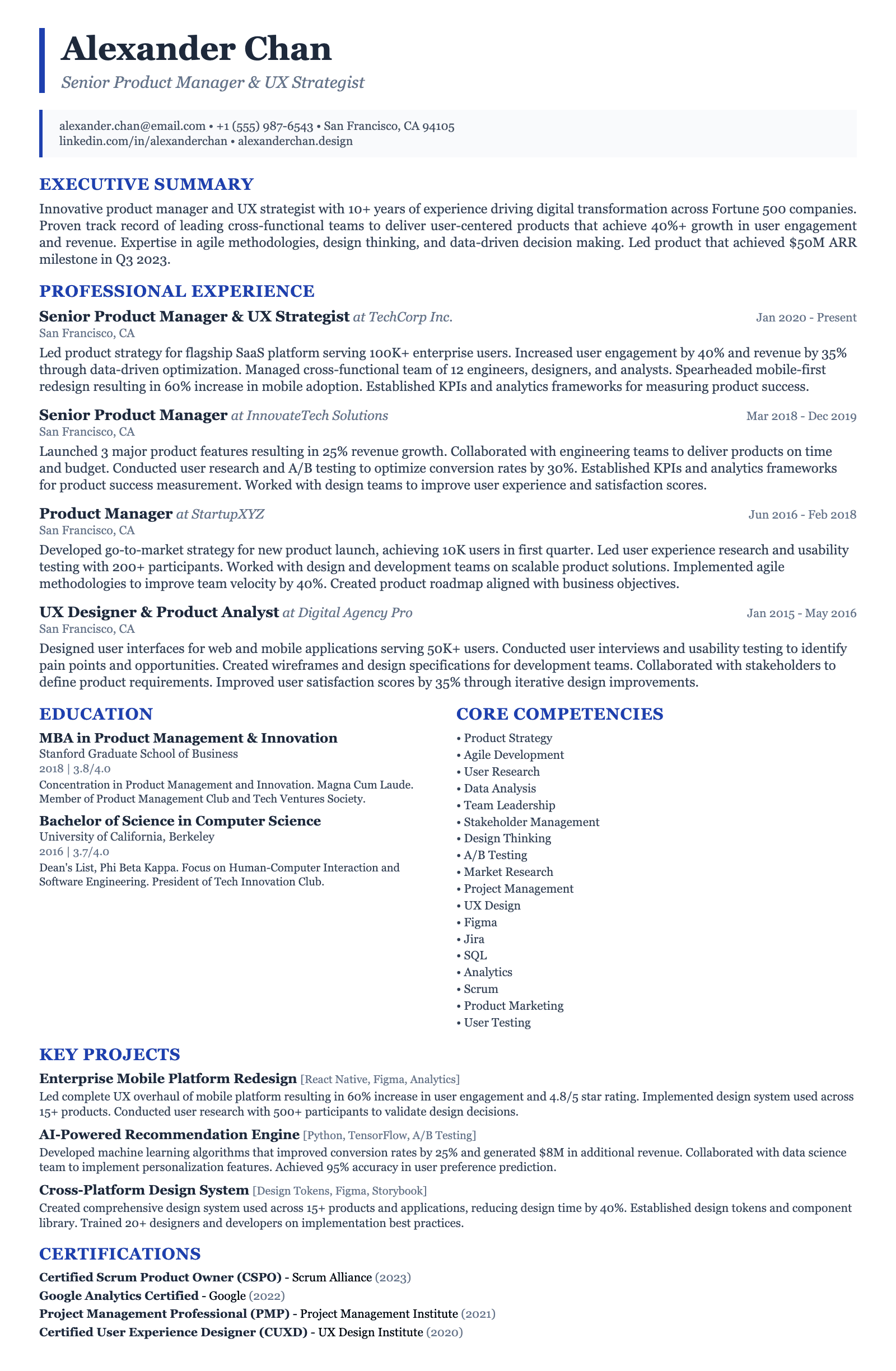
These templates are pre-configured with the headers and layout recruiters expect in the USA.


Common Questions
What is the standard resume length in the US for Nanny?
In the United States, a one-page resume is the gold standard for anyone with less than 10 years of experience. For senior executives, two pages are acceptable, but conciseness is highly valued. Hiring managers and ATS systems expect scannable, keyword-rich content without fluff.
Should I include a photo on my Nanny resume?
No. Never include a photo on a US resume. US companies strictly follow anti-discrimination laws (EEOC), and including a photo can lead to your resume being rejected immediately to avoid bias. Focus instead on skills, metrics, and achievements.
How do I tailor my Nanny resume for US employers?
Tailor your resume by mirroring keywords from the job description, using US Letter (8.5" x 11") format, and leading each bullet with a strong action verb. Include quantifiable results (percentages, dollar impact, team size) and remove any personal details (photo, DOB, marital status) that are common elsewhere but discouraged in the US.
What keywords should a Nanny resume include for ATS?
Include role-specific terms from the job posting (e.g., tools, methodologies, certifications), standard section headings (Experience, Education, Skills), and industry buzzwords. Avoid graphics, tables, or unusual fonts that can break ATS parsing. Save as PDF or DOCX for maximum compatibility.
How do I explain a career gap on my Nanny resume in the US?
Use a brief, honest explanation (e.g., 'Career break for family' or 'Professional development') in your cover letter or a short summary line if needed. On the resume itself, focus on continuous skills and recent achievements; many US employers accept gaps when the rest of the profile is strong and ATS-friendly.
How long should my Nanny resume be?
Ideally, your Nanny resume should be one page. Focus on relevant experience and quantifiable achievements. For example, instead of saying "Planned activities," say "Planned and executed daily educational activities, increasing engagement by 30% as measured by parental feedback." If you have extensive experience (over 10 years), a two-page resume may be acceptable, but prioritize the most recent and relevant roles. Use a clear, concise format to highlight your key skills and experience.
What are the most important skills to include on my Nanny resume?
Beyond basic childcare, highlight skills like communication, organization, and adaptability. Mention your experience with meal preparation (including allergy awareness), first aid/CPR certification, and any specialized skills like tutoring or music lessons. Showcase your ability to manage children's schedules using tools like Google Calendar or Cozi. Emphasize your problem-solving skills and ability to handle emergencies calmly. Showcase experience with various age groups and specific developmental stages.
How can I make my Nanny resume ATS-friendly?
Use a simple, clean format with standard headings like "Summary," "Experience," and "Skills." Avoid tables, images, and unusual fonts that can confuse ATS systems. Use keywords from the job description throughout your resume, especially in your skills section and experience descriptions. Submit your resume as a PDF to preserve formatting while remaining readable by ATS. Ensure your contact information is clearly visible and machine-readable.
What certifications are valuable to include on a Nanny resume?
CPR and First Aid certifications are essential and should be prominently displayed. Additional certifications such as Certified Nanny Professional (CNP) or specialized training in child development can significantly enhance your resume. Include the certification name, issuing organization, and expiration date (if applicable). Mention any relevant coursework or workshops you've attended, such as those focused on specific age groups or special needs.
What are common mistakes to avoid on a Nanny resume?
Avoid generic descriptions of your responsibilities. Instead, quantify your achievements and highlight specific skills. Don't include irrelevant information, such as hobbies unrelated to childcare. Proofread carefully for typos and grammatical errors. Avoid using an unprofessional email address. Make sure your resume is tailored to each job application, highlighting the skills and experience most relevant to the specific role.
How can I transition to a Nanny role if I have limited childcare experience?
Highlight any relevant experience, such as babysitting, volunteering at schools or daycare centers, or caring for family members. Emphasize transferable skills like communication, organization, and problem-solving. Obtain certifications in CPR and First Aid to demonstrate your commitment to safety. Consider taking courses in child development or early childhood education. Craft a compelling cover letter explaining your passion for childcare and your willingness to learn and grow in the role.
Sources: Salary and hiring insights reference NASSCOM, LinkedIn Jobs, and Glassdoor.
Our CV and resume guides are reviewed by the ResumeGyani career team for ATS and hiring-manager relevance.