

Mechanical Engineer Resume Format (US Edition)
The US job market for Mechanical Engineers is highly competitive. Recruiters look for 'Action Verbs' and quantifiable achievements. This template is designed to pass ATS filters used by top US companies.

Salary Range
$85k - $165k
Use strong action verbs and quantifiable results in every bullet. Recruiters and ATS both rank resumes higher when they see impact (e.g. “Increased conversion by 20%”) instead of duties.
A Day in the Life of a Mechanical Engineer
My day usually begins with a project status meeting, where I collaborate with cross-functional teams (electrical, software) to review progress on ongoing projects, such as the design and prototyping of a new robotic arm for manufacturing. I then spend a significant portion of my time utilizing CAD software like SolidWorks and ANSYS to refine designs, conduct finite element analysis (FEA) simulations, and ensure structural integrity. A key task involves preparing detailed engineering drawings and specifications for manufacturing. I also devote time to troubleshooting issues identified during testing, often involving root cause analysis using tools like Six Sigma methodologies. Later, I might be involved in vendor meetings to discuss material selection or manufacturing processes. The day culminates in documenting findings, updating project plans, and preparing reports for stakeholders, ensuring all work complies with ASME standards.
Skills Matrix
Must Haves
Technical
Resume Killers (Avoid!)
Listing only job duties without quantifiable achievements or impact.
Using a generic resume for every Mechanical Engineer application instead of tailoring to the job.
Including irrelevant or outdated experience that dilutes your message.
Using complex layouts, graphics, or columns that break ATS parsing.
Leaving gaps unexplained or using vague dates.
Writing a long summary or objective instead of a concise, achievement-focused one.
Typical Career Roadmap (US Market)
Top Interview Questions
Be prepared for these common questions in US tech interviews.
Q: Describe a time you had to troubleshoot a complex mechanical system. What steps did you take to identify the problem and implement a solution?
MediumExpert Answer:
In my previous role, a robotic arm on the assembly line began experiencing erratic movements, causing production delays. I started by systematically checking each component, including the motors, sensors, and control system. Using diagnostic software and a multimeter, I identified a faulty sensor that was providing incorrect feedback to the controller. I replaced the sensor, recalibrated the system, and implemented a preventative maintenance schedule to avoid future issues. The downtime was minimized, and production returned to normal within hours. This experience honed my analytical skills and ability to work under pressure.
Q: Explain your experience with Finite Element Analysis (FEA) and how you've used it to optimize a design.
MediumExpert Answer:
I have extensive experience with FEA using ANSYS. In a project involving a new heat exchanger design, I used FEA to simulate thermal stresses and identify potential weak points. By analyzing the results, I was able to optimize the geometry and material selection to improve the heat transfer efficiency and structural integrity while minimizing material usage. The optimized design passed all performance tests and resulted in a 10% reduction in manufacturing costs. This demonstrates my ability to apply FEA to enhance product performance and reduce costs.
Q: Tell me about a time you had to work on a project with conflicting requirements. How did you navigate the situation?
MediumExpert Answer:
During the development of an automated packaging system, the marketing team wanted a compact design, while the manufacturing team needed ample space for maintenance. I facilitated a series of meetings to understand everyone's priorities. I then used CAD software to create several design iterations, presenting the trade-offs between size and maintainability. We ultimately agreed on a compromise that met the essential requirements of both teams, incorporating modular components for easier maintenance within a reasonably compact footprint. This situation taught me the importance of clear communication and collaborative problem-solving.
Q: How would you approach designing a new type of sustainable packaging for a food product?
HardExpert Answer:
My approach would involve several key steps. First, I'd research biodegradable and compostable materials that meet FDA regulations for food contact. Then, I'd use CAD software to design a prototype that minimizes material usage while maintaining product integrity. I would conduct FEA to ensure it can withstand handling and transportation. Life cycle assessment software would help to evaluate the environmental impact of the packaging from production to disposal. Finally, I'd collaborate with suppliers to identify cost-effective manufacturing processes, ensuring that the packaging is both sustainable and economically viable. The goal is a design that minimizes environmental impact without compromising product protection or affordability.
Q: Describe a time when you had to learn a new software or tool quickly to complete a project.
EasyExpert Answer:
In my previous role, we needed to implement statistical process control (SPC) for a new manufacturing process, and the company had just adopted Minitab. I had limited experience with it. To get up to speed quickly, I completed online tutorials, attended internal training sessions, and consulted with a colleague who was proficient in Minitab. Within a week, I was able to create control charts, analyze process data, and identify sources of variation. This allowed us to implement SPC effectively, improving process stability and reducing defects. This experience reinforced my ability to learn quickly and adapt to new technologies.
Q: Explain the principles of GD&T (Geometric Dimensioning and Tolerancing) and how you apply them in your work.
HardExpert Answer:
GD&T is a symbolic language used to define and communicate engineering tolerances and relationships between features on a part. I use GD&T daily to ensure that manufactured parts meet design specifications and functional requirements. For example, when designing a gear assembly, I use GD&T to specify the allowable variation in the position and orientation of the gear teeth, ensuring proper meshing and smooth operation. Properly applying GD&T minimizes manufacturing costs by allowing for realistic tolerances, while still guaranteeing the part's functionality and interchangeability. It also reduces the risk of assembly issues and performance problems.
ATS Optimization Tips for Mechanical Engineer
Use exact keywords from the job description in your resume, particularly in the skills and experience sections. ATS systems prioritize matching these keywords.
Format your resume with clear headings like "Summary," "Skills," "Experience," and "Education." This helps the ATS parse the information correctly.
Quantify your accomplishments whenever possible. Use numbers and metrics to demonstrate the impact of your work. For example, "Reduced manufacturing costs by 15% through design optimization."
Use a simple, clean font like Arial, Calibri, or Times New Roman in a readable size (10-12 points). Avoid fancy fonts that can confuse the ATS.
Save your resume as a PDF to preserve formatting and prevent any changes during the submission process. Ensure the PDF is text-searchable and not an image.
Tailor your resume to each specific job application, highlighting the skills and experiences that are most relevant to the position.
Include a skills section that lists both technical and soft skills relevant to mechanical engineering, such as proficiency in SolidWorks, FEA analysis, or project management.
Optimize your resume for geographic location by including relevant city and state information. This helps the ATS match you with local opportunities.
Approved Templates for Mechanical Engineer
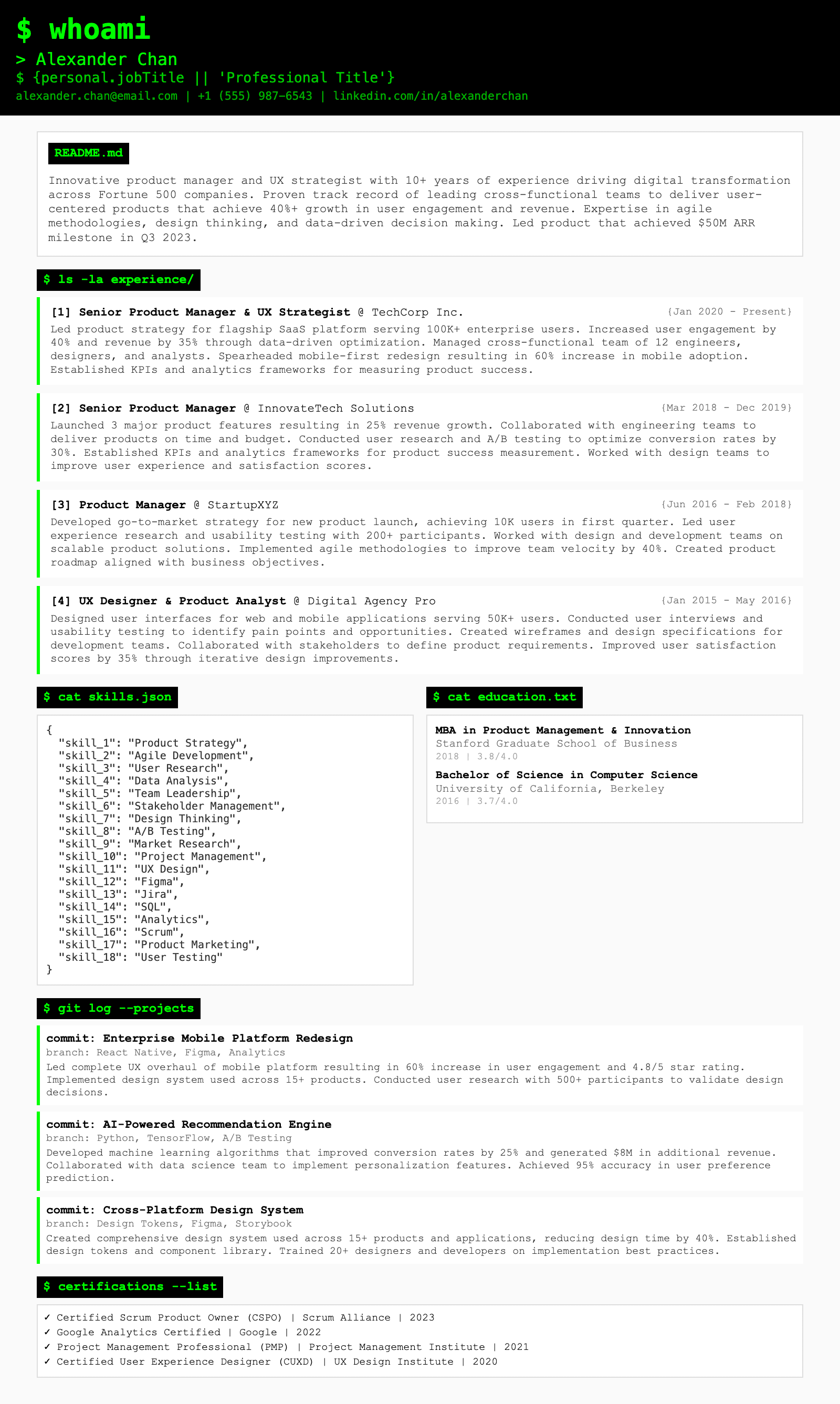
These templates are pre-configured with the headers and layout recruiters expect in the USA.


Common Questions
What is the standard resume length in the US for Mechanical Engineer?
In the United States, a one-page resume is the gold standard for anyone with less than 10 years of experience. For senior executives, two pages are acceptable, but conciseness is highly valued. Hiring managers and ATS systems expect scannable, keyword-rich content without fluff.
Should I include a photo on my Mechanical Engineer resume?
No. Never include a photo on a US resume. US companies strictly follow anti-discrimination laws (EEOC), and including a photo can lead to your resume being rejected immediately to avoid bias. Focus instead on skills, metrics, and achievements.
How do I tailor my Mechanical Engineer resume for US employers?
Tailor your resume by mirroring keywords from the job description, using US Letter (8.5" x 11") format, and leading each bullet with a strong action verb. Include quantifiable results (percentages, dollar impact, team size) and remove any personal details (photo, DOB, marital status) that are common elsewhere but discouraged in the US.
What keywords should a Mechanical Engineer resume include for ATS?
Include role-specific terms from the job posting (e.g., tools, methodologies, certifications), standard section headings (Experience, Education, Skills), and industry buzzwords. Avoid graphics, tables, or unusual fonts that can break ATS parsing. Save as PDF or DOCX for maximum compatibility.
How do I explain a career gap on my Mechanical Engineer resume in the US?
Use a brief, honest explanation (e.g., 'Career break for family' or 'Professional development') in your cover letter or a short summary line if needed. On the resume itself, focus on continuous skills and recent achievements; many US employers accept gaps when the rest of the profile is strong and ATS-friendly.
How long should my Mechanical Engineer resume be in the US?
For entry-level Mechanical Engineers or those with less than five years of experience, a one-page resume is typically sufficient. Experienced professionals with extensive project portfolios and diverse skill sets can justify a two-page resume. Ensure that every piece of information included directly supports your qualifications for the targeted role, highlighting quantifiable achievements and relevant skills such as proficiency in CAD/CAM software like AutoCAD or CATIA.
What are the most important skills to highlight on a Mechanical Engineer resume?
Beyond core engineering principles, highlight proficiency in specific software packages like SolidWorks, ANSYS, or MATLAB. Emphasize your experience with FEA, CFD, and GD&T. Showcase your problem-solving abilities, including any experience with Lean Manufacturing or Six Sigma methodologies. Quantify your accomplishments whenever possible, such as reducing manufacturing costs by a certain percentage or improving product performance metrics. Don't forget essential soft skills like teamwork and communication demonstrated through project leadership or collaborative initiatives.
How can I optimize my Mechanical Engineer resume for Applicant Tracking Systems (ATS)?
To pass the ATS filter, use a clean, simple format with standard headings like "Skills," "Experience," and "Education." Avoid tables, images, and text boxes, as these can confuse the system. Incorporate relevant keywords from the job description throughout your resume, especially in the skills section and work experience bullet points. Save your resume as a PDF to preserve formatting. Tools like Jobscan can help you analyze your resume against a specific job description to identify missing keywords.
Are certifications important for Mechanical Engineer resumes in the US?
Relevant certifications can significantly enhance your resume. Consider obtaining certifications such as Professional Engineer (PE) license, Certified SolidWorks Professional (CSWP), or certifications related to specific areas like Lean Six Sigma (Green Belt, Black Belt). Include the full certification name, issuing organization, and date of issuance on your resume. These certifications demonstrate your commitment to professional development and specialized knowledge, making you a more attractive candidate to employers.
What are some common mistakes to avoid on a Mechanical Engineer resume?
Avoid using vague language or generic descriptions of your responsibilities. Instead, focus on quantifiable achievements and specific examples of your contributions. Don't neglect to proofread your resume carefully for grammatical errors and typos. Ensure that your skills section is tailored to the specific requirements of the job, including relevant software skills like Python for automation. Also, avoid exaggerating your skills or experience, as this can be easily detected during the interview process.
How should I handle a career transition on my Mechanical Engineer resume?
If you're transitioning into mechanical engineering from a different field, highlight transferable skills such as problem-solving, analytical thinking, and project management. Consider taking relevant coursework or certifications to demonstrate your commitment to the field. In your resume, focus on projects or experiences that showcase your aptitude for mechanical engineering principles, even if they weren't explicitly in that domain. Craft a compelling summary statement that explains your career transition and highlights your passion for mechanical engineering, perhaps mentioning exposure to CAD or experience with statistical analysis software.
Sources: Salary and hiring insights reference NASSCOM, LinkedIn Jobs, and Glassdoor.
Our CV and resume guides are reviewed by the ResumeGyani career team for ATS and hiring-manager relevance.